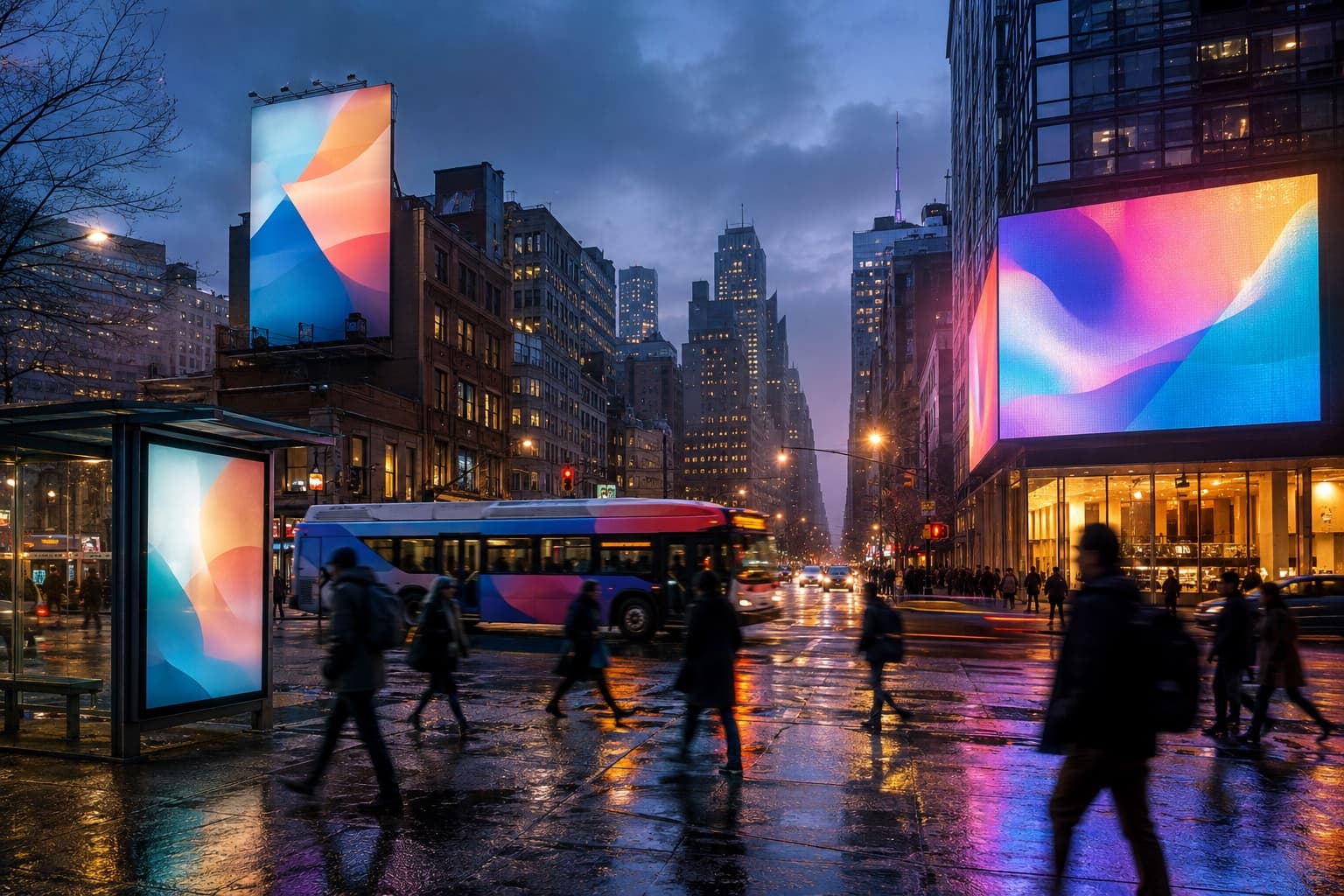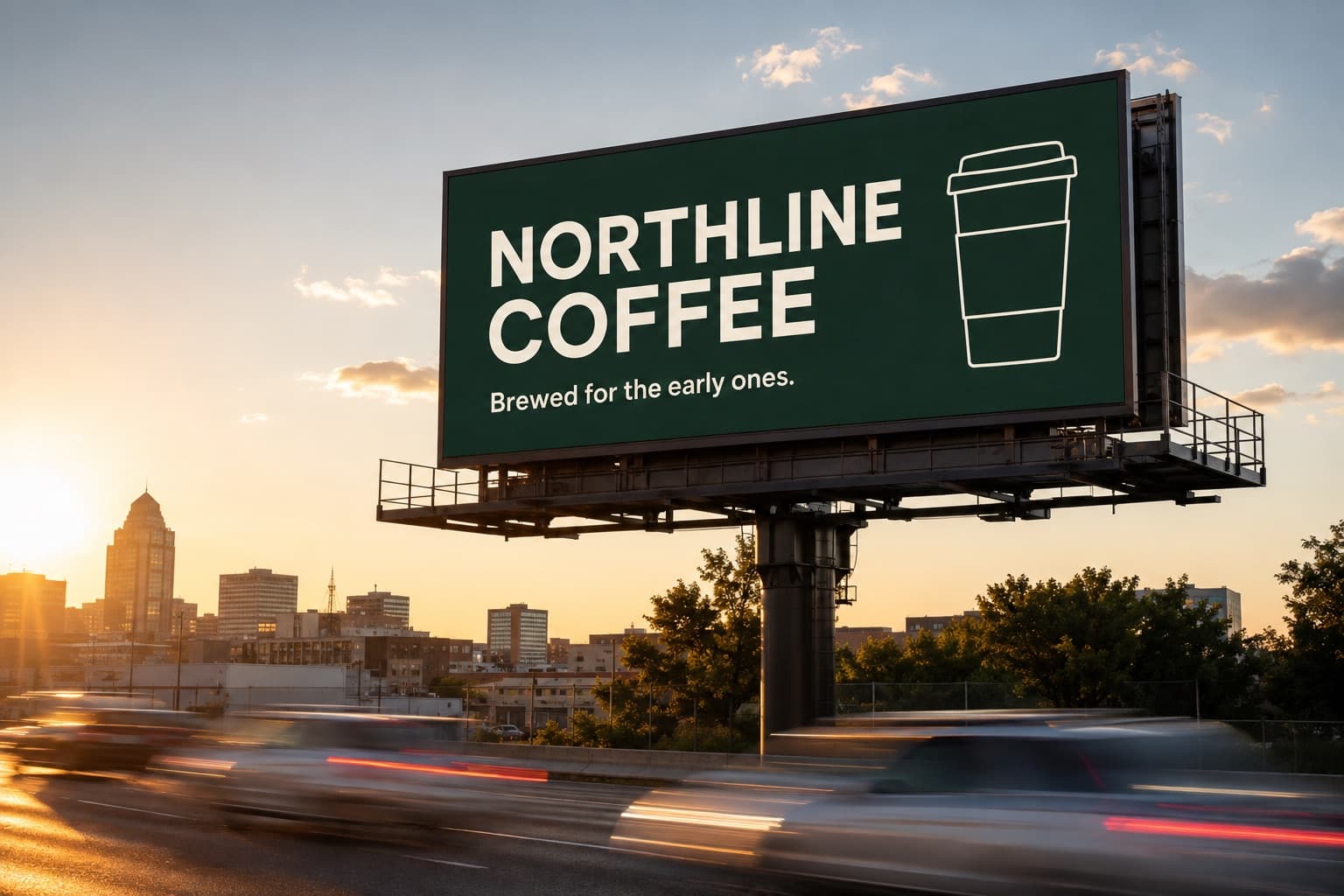

OOH advertising — out-of-home advertising — is any paid ad a person sees away from home: billboards, transit ads, wallscapes, street furniture, and the digital screens now built into many of those same formats. It is the oldest form of mass-market advertising and, unlike a browser ad, it cannot be blocked, skipped, or closed.
What Counts as Out-of-Home Advertising
"OOH" is the umbrella term; the formats underneath it are what a media plan actually buys:
- Billboards — static bulletins and posters along highways and major roads, the most recognizable OOH format
- Digital out-of-home (DOOH) — LED billboards and screens that rotate creative across several advertisers on one structure
- Transit — bus wraps, rail and subway platform ads, and airport displays
- Wallscapes and building wraps — large-format ads mounted directly on a building facade
- Street furniture — bus shelters, benches, and kiosks in dense pedestrian areas
Static and digital OOH are priced and bought differently enough that they deserve their own comparison — see how much a billboard costs for the specific ranges and what drives them.
How OOH Advertising Works
An OOH buy is sold by location and flight, not by impression the way a search or social ad is. A media owner controls a physical structure in a specific market; an advertiser books that structure for a set number of weeks (a "flight," typically in four-week increments) and pays for the exclusive use of that face, or a rotating share of a digital screen. Reach is estimated from third-party traffic audits of the location — daily vehicle or foot counts — rather than measured per click.
Why Brands Still Buy OOH in a Digital-First Market
- Unskippable, unblockable reach — no ad blocker or "skip" button exists for a physical structure
- Geographic precision — a brand can target a specific corridor, neighborhood, or market rather than an entire region
- Built-in trust — a large, permanent, visible ad spend reads as a signal of a real, established business
- Works with digital, not against it — OOH consistently lifts search volume and social engagement for the same campaign, making it a complement to a digital plan rather than a substitute for one
What OOH Advertising Costs
Cost depends on format, market, and whether the structure is static or digital — a small static poster and a premium digital bulletin in a top-20 market can be an order of magnitude apart. The full breakdown, including typical monthly ranges and the six factors that move the price, is in How Much Does a Billboard Cost?.
OOH Advertising by Market
Availability, traffic, and pricing are set locally — an OOH plan for a market the size of Los Angeles looks nothing like one for a smaller metro, in inventory or in cost. Reviewing what is actually available in a target market is the first real step in an OOH plan, ahead of picking formats.
Planning an OOH Campaign
- Start with the market and audience, not the format — the right structure follows from where the audience actually is
- Decide static or digital based on whether the campaign needs one dedicated face or can work within a shared rotation
- Set a flight length before requesting quotes — pricing and availability both depend on it
- Pair OOH with a digital or social flight where possible; the lift compounds rather than competing for the same budget
Talk to an OOH Media Buyer
Every market and format above is a starting point, not a plan. Talk to Swing Media to scope real inventory, pricing, and availability for your target market and dates.