A billboard advertising truck mounts a static or digital board on a moving vehicle and drives a planned route through a target area, instead of sitting on one fixed structure in one location. That single difference — motion instead of a fixed address — is what a billboard truck is actually selling: an advertiser chooses the streets, the neighborhoods, and the hours the board is in front of people, rather than buying a structure and waiting for traffic to pass it.
This guide covers what a billboard advertising truck actually is, how static and digital trucks differ, how routes and placements get planned, what drives the cost of a truck campaign, and when the format makes more sense than a fixed billboard.
What a Billboard Advertising Truck Is
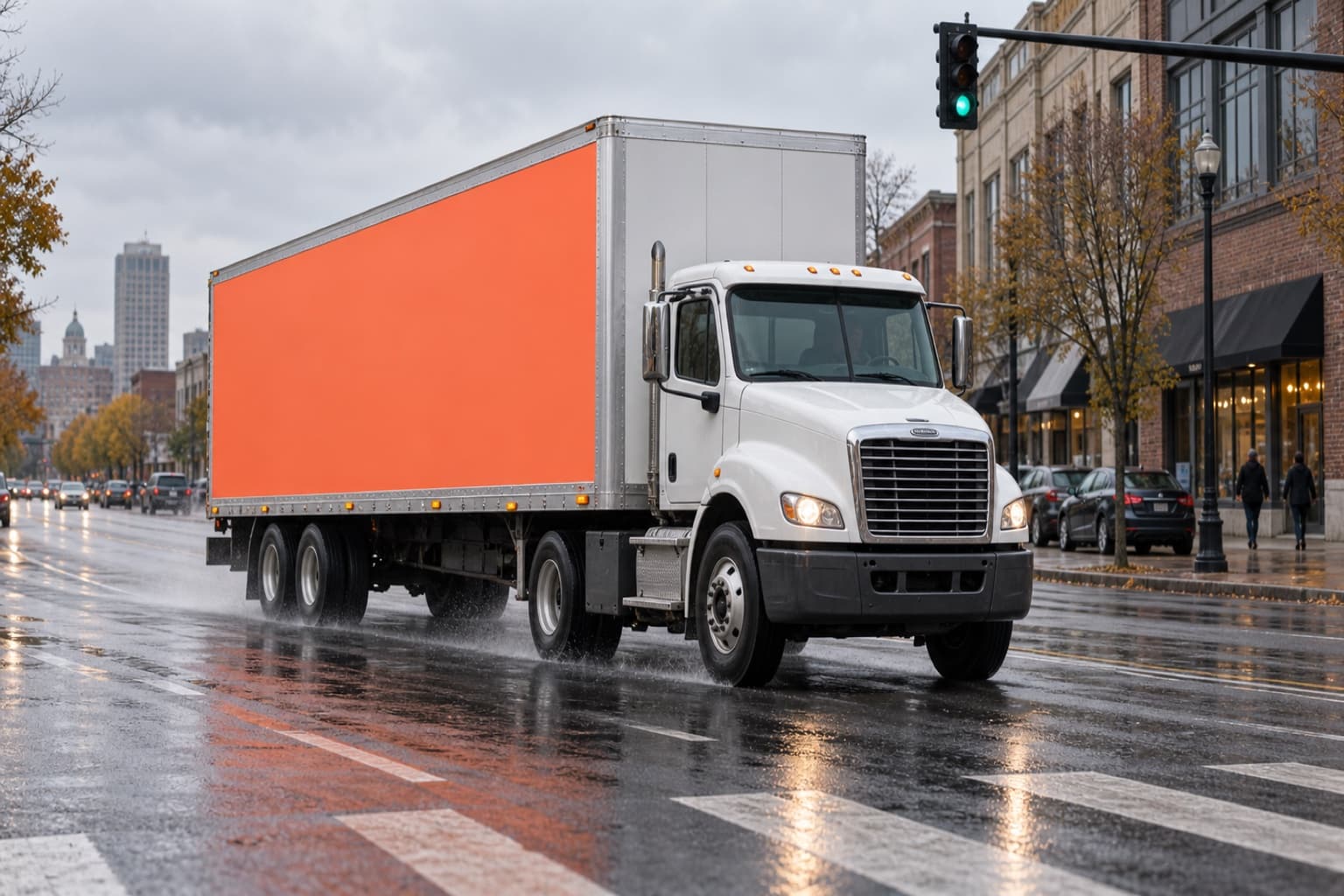
A billboard advertising truck, also called a mobile billboard or a truck-mounted billboard, is a board built onto a trailer or a flatbed that a driver takes on a set route or parks at a fixed location for a defined period. Two builds cover most of the category:
- Static billboard trucks. A printed vinyl panel, similar to a bulletin face, mounted on both sides (and sometimes the back) of the trailer. The creative stays fixed for the length of the campaign, the same way a static bulletin does.
- Digital billboard trucks (mobile LED trucks). A programmable LED screen replaces the printed panel, which lets the creative rotate, update remotely, or run video and motion where local rules allow it. A digital truck can also carry more than one advertiser in rotation, the same way a fixed digital billboard shares a loop.
Both builds solve the same problem: putting a board exactly where an advertiser wants it, on a schedule the advertiser sets, without waiting for a landlord's structure to come up for lease.
Routes vs. Static Parking: How Placement Actually Works
A billboard truck campaign is planned one of two ways, and the choice changes what the board is good at.
Route-driven. The truck follows a defined path through a target area — a downtown core, a set of commercial corridors, the roads around a competitor's location, or a delivery-style loop through several neighborhoods over a shift. Route-driven campaigns are built for coverage: reaching drivers, pedestrians, and businesses across a defined geography rather than one intersection.
Static parking. The truck parks at one location for a set window — outside a conference center during an event, near a stadium before a game, or at a high-traffic intersection during commute hours — and functions closer to a temporary fixed billboard. Static parking trades geographic coverage for concentrated exposure to one specific audience at one specific moment.
Most operators track a truck's route with GPS while the campaign runs, which is the mobile format's main reporting advantage over a fixed board: the advertiser gets a logged path and timestamp rather than a static impression estimate for a structure that never moves.
What Drives the Cost of a Billboard Truck Campaign
There is no single rate for a billboard advertising truck, because the price is assembled from several variables that move independently:
- Static vs. digital. A digital truck costs more to run than a static one — the screen, the power source, and the software behind it are more expensive equipment than a printed vinyl panel, and that shows up in the day rate.
- Hours and days on the road. A truck priced by the day or by the hour costs differently depending on how many hours it actually operates and how many days the campaign runs.
- Route length and market. A longer, denser route in a major metro takes more driver time and fuel than a short loop in a smaller market, and the day rate reflects it.
- Route-driven vs. static parking. Parking a truck for a single high-traffic window is often priced differently than a full-day driving route, because the two ask for different amounts of driver time and fuel.
- Permitting. Some cities and counties restrict or permit-gate mobile billboards specifically, separate from the rules that apply to a fixed structure — confirm local permitting before a route is finalized, not after a truck is booked.
- Production. A static wrap has a print-and-install cost at the start of the flight; a digital truck's creative cost is closer to producing a video or motion file, similar to what a digital bulletin needs.
For how these variables compare against a fixed billboard's cost structure, see How Much Does a Billboard Cost?
When a Billboard Truck Beats a Fixed Billboard — and When It Doesn't
A billboard truck wins where a fixed structure can't compete on flexibility. It can reach several neighborhoods in one campaign instead of one intersection. It can show up at a single event, a competitor's parking lot, or a city council meeting on a specific day, then move on — no fixed board can do that. And a route can change week to week as a campaign's target area changes, where a fixed structure is locked to its address for the length of the lease.
A fixed billboard wins where sustained, repeated exposure to the same commuters matters more than geographic reach. A driver who passes the same bulletin twice a day, every day, for a month builds a different kind of familiarity than a driver who sees a truck once. For a broader look at where trucks and other mobile formats sit against the rest of the outdoor advertising category, see Types of Outdoor Advertising.
Frequently Asked Questions
Is a billboard advertising truck the same as a mobile billboard? Yes — "billboard advertising truck," "mobile billboard," and "truck-mounted billboard" describe the same format: a board built onto a vehicle rather than a fixed structure.
Do billboard trucks need a permit? Often, and separately from the rules that apply to fixed billboards. Permitting for mobile billboards is set city by city and sometimes county by county, so a route needs to be checked against local rules before it's finalized, not after the truck is booked.
Can a billboard truck run digital or video creative? A digital billboard truck can run a rotating screen and, in many locations, motion or video — but the same local rules that restrict brightness, dwell time, and transitions on a fixed digital billboard often apply to a mobile one, so confirm what a given route allows before the creative is designed.
How is a billboard truck route tracked? Most operators track the truck with GPS for the length of the campaign and can provide a logged path and timestamps, which is the format's main advantage over reporting for a fixed structure that never changes location.
Is a billboard truck cheaper than a fixed billboard? It depends on the market, the route, and whether the truck is static or digital — there is no single comparison that holds across every case. Static trucks are generally the lower-cost build of the two; digital trucks cost more to run but add the ability to rotate creative and, in some markets, more than one advertiser.
Plan a Billboard Truck Route
Swing Media has planned outdoor advertising campaigns since 1998, across twelve major cities and more than 400 premium sites, working across twenty formats under one landmark standard. Talk to Swing Media about routing a billboard truck for your market and dates, or start with the full range of services.