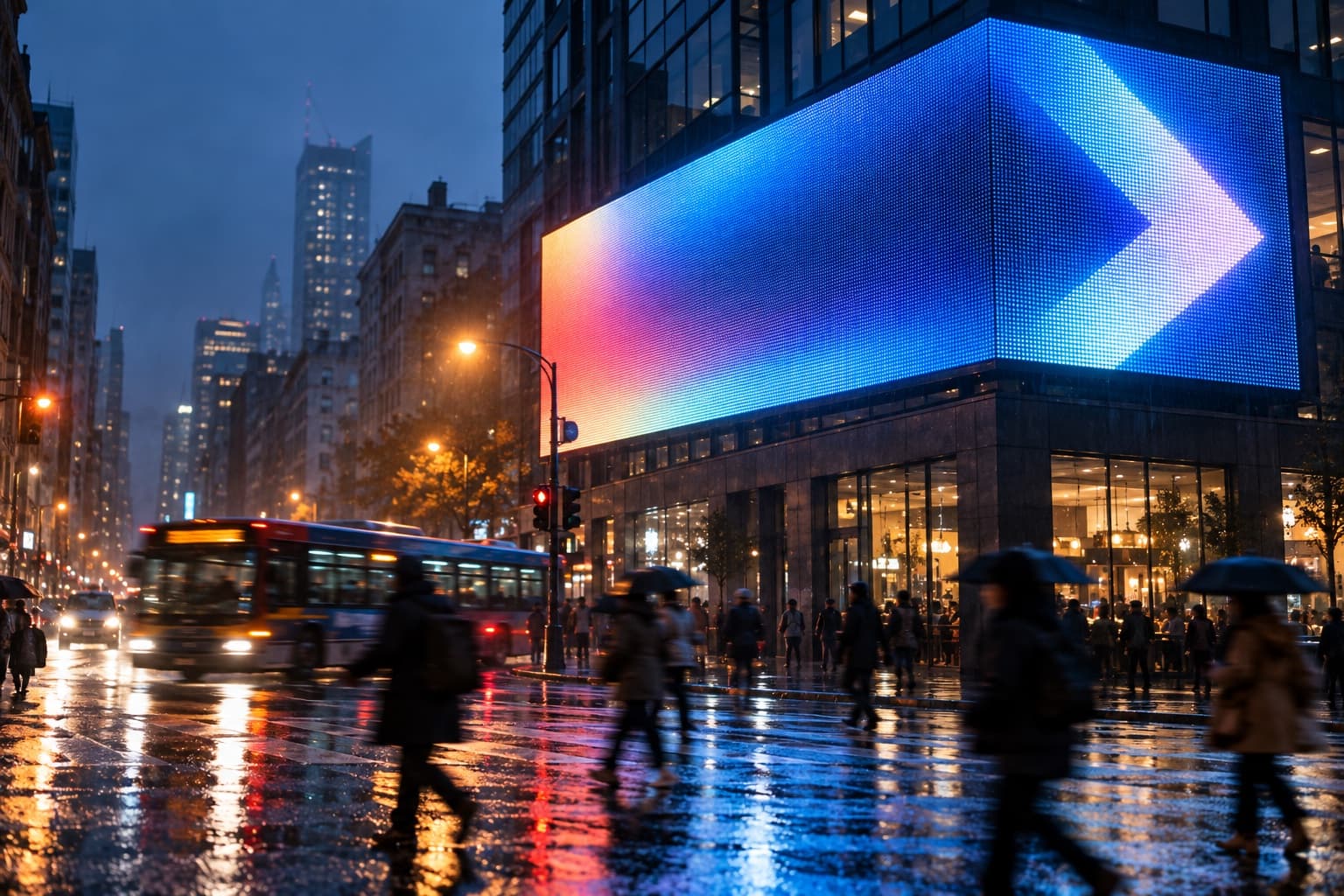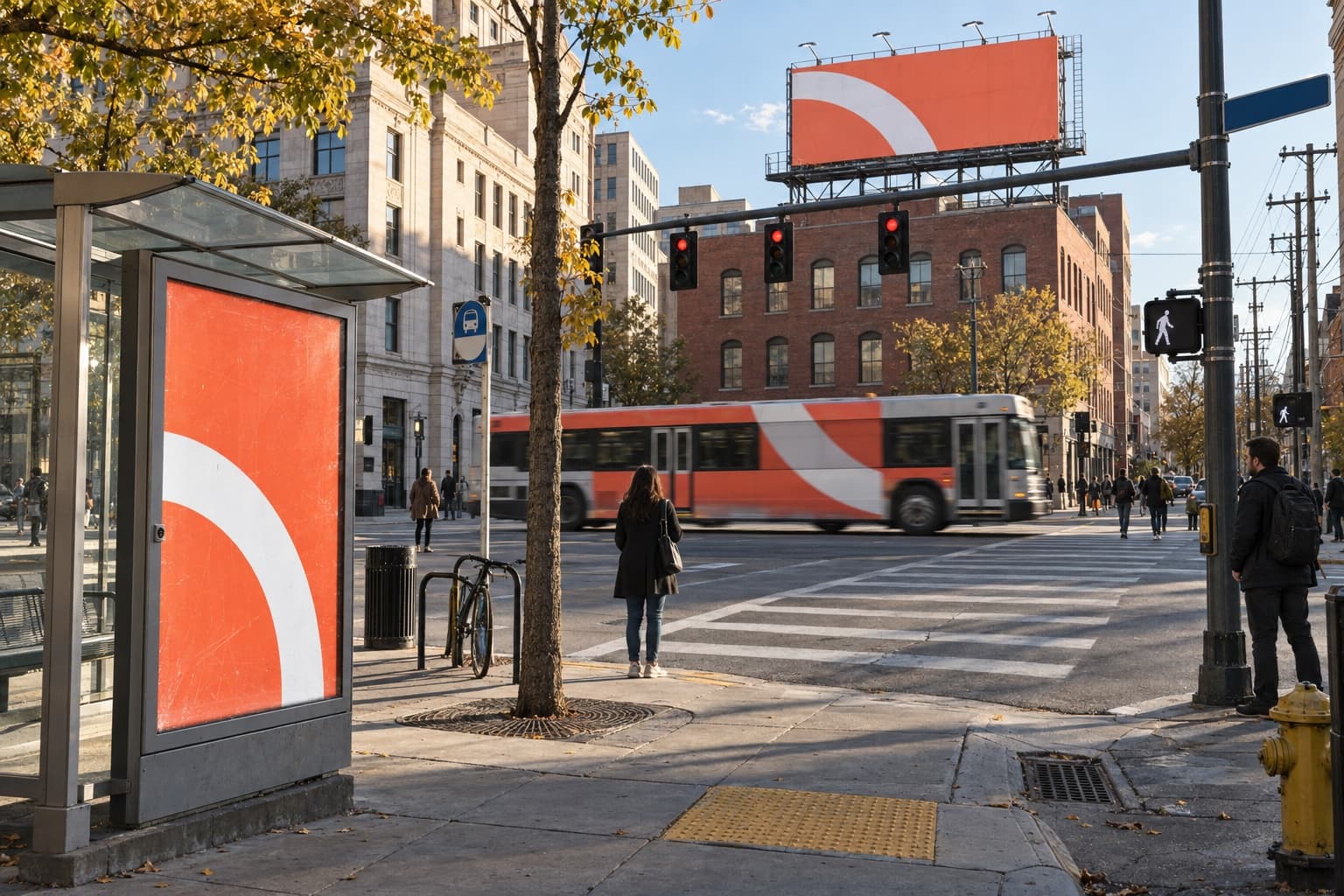

Media buying and planning are two different jobs that get talked about as one phrase. Planning decides where a campaign should show up — which markets, which formats, which audience, and for how long. Buying is what happens after that plan exists: negotiating the actual inventory, locking contracts, and getting the creative into production on schedule. A campaign that skips straight to buying without a plan ends up renting whatever board is available instead of the one that reaches the right audience.
What Media Buying and Planning Actually Means
In outdoor advertising, "planning" and "buying" sit on either side of one decision: what to spend money on and why.
Media planning starts with the objective — awareness in a launch market, share of voice against a competitor, coverage along a commuter corridor — and works backward to a format and market mix that can deliver it. A planner is weighing bulletins against wallscapes against digital boards, one city against three, four weeks against twelve, before a single dollar moves.
Media buying is the execution layer. Once the plan names a market, a format, and a flight window, buying is the process of finding available inventory that matches it, requesting rates, negotiating price and position, and signing the contract that reserves the space. Buying also carries the operational load planning doesn't: production specs, install and removal dates, proof-of-posting, and make-goods if a board goes dark early.
Treating them as one step is the most common way an outdoor budget gets spent inefficiently — a buyer without a plan optimizes for "what's available now," not for what the campaign actually needs to do.
The Planning Process, Step by Step
A workable outdoor media plan generally moves through the same sequence, regardless of category:
- Define the objective and the audience. Awareness, foot traffic, or share of voice each point to a different format mix and flight length. A launch wants density in a short window; a sustaining brand wants consistent share of voice spread across the year.
- Choose the markets. Local businesses plan around a single trade area; regional and national brands weigh markets against where the audience actually concentrates, not just population size.
- Select the formats. Bulletins, posters, wallscapes, transit, and digital boards each carry a different dwell time, reach pattern, and price. Static and digital formats behave differently on cost even within the same market, which is why format selection happens before a price gets negotiated, not after.
- Set the flight and frequency. How long the campaign runs and how often the audience sees it changes both the cost and the effect — a two-week burst and a twelve-week sustain are different plans, not the same plan at different budgets.
- Allocate the budget across the mix. The plan assigns dollars to markets and formats in the order that serves the objective, then buying tests that allocation against what inventory is actually available.
How Buying Works Once the Plan Is Set
Buying an outdoor campaign is closer to real estate than to a digital ad auction — every board is a physical, single-advertiser asset, not an impression sold at scale.
- Availability first. Inventory is checked against the plan's markets and formats; a board that fits the brief but isn't open in the flight window doesn't make the list.
- Rate negotiation. List rate, term length, and market demand all move price. A twelve-week buy and a two-week buy on the same board rarely cost the same per week.
- Position and adjacency. Line of sight, traffic direction, and what's posted nearby all affect how a board performs, and they're negotiated alongside price, not as an afterthought.
- Production and install. Once a board is contracted, production specs and print deadlines are locked to the install date — a late file can cost a posting cycle the plan already paid for.
- Proof of performance. After posting, the buyer confirms the board actually shows what was contracted, on the dates contracted, which is what makes the next negotiation credible.
Understanding the range of outdoor formats before this stage matters, because the buy only works if the plan already named the right format for the objective.
Metrics a Planner Uses to Judge a Buy
Once a plan is built, it gets evaluated the same way media buyers evaluate any channel — against reach, frequency, and cost efficiency, adapted for a channel where the "impression" is a person passing a fixed location rather than a screen loading an ad. A planner is weighing how many people a placement reaches, how often within the flight, and what that costs against the objective — not just what the board itself costs to rent. That framing is what keeps a plan honest: two boards at the same weekly rate can deliver very different results depending on traffic pattern and dwell time.
How Swing Media Approaches Planning and Buying
Swing Media treats planning and buying as one continuous process rather than a handoff between departments. The company's stated approach runs on three operating principles: strategic planning, production and posting quality, and reporting cadence with post-campaign proof — meaning the plan doesn't end when the contract is signed, and the buy is judged against the plan it was built to execute.
That continuity matters most on the format side. Swing Media's own positioning is "twenty formats, one landmark standard," which is a way of saying the plan picks the format and the format doesn't pick the plan. A planner working against a single-format vendor is choosing between what that vendor sells; a planner working against a broad format set is choosing against the objective.
Frequently Asked Questions
Is media planning always done before buying? In a well-run campaign, yes. Buying without a finished plan means negotiating inventory against a guess at the objective rather than against a defined market, format, and flight — which usually shows up later as inventory that doesn't fit what the campaign needed.
Can a small or local business do media planning, or is it only for national brands? The process scales down. A local business plans around a single trade area and a handful of boards instead of multiple markets, but the same sequence — objective, audience, format, flight, budget — still applies.
What's the difference between a media plan and a media buy? The plan is the strategy document: objective, markets, formats, and budget allocation. The buy is the execution of that strategy — the actual contracts, rates, and posted inventory.
Does digital out-of-home change the planning process? It adds flexibility — shorter commitments, dayparting, and the ability to rotate creative — but the underlying planning questions (objective, audience, market, format fit) stay the same. Measurement is the separate layer that sits on top of the same planning fundamentals.
How far in advance should planning start relative to a campaign's launch date? Enough lead time to secure the boards a plan actually wants — premium inventory in strong markets gets contracted ahead of the flight, so planning that starts after a launch date is already fixed is planning around whatever is left over, not around the objective.
Ready to Build a Plan
A plan is only as good as the buy that executes it, and a buy is only as good as the plan behind it. Talk to Swing Media about planning and buying an outdoor campaign, or browse available formats and markets to see where a plan could start.