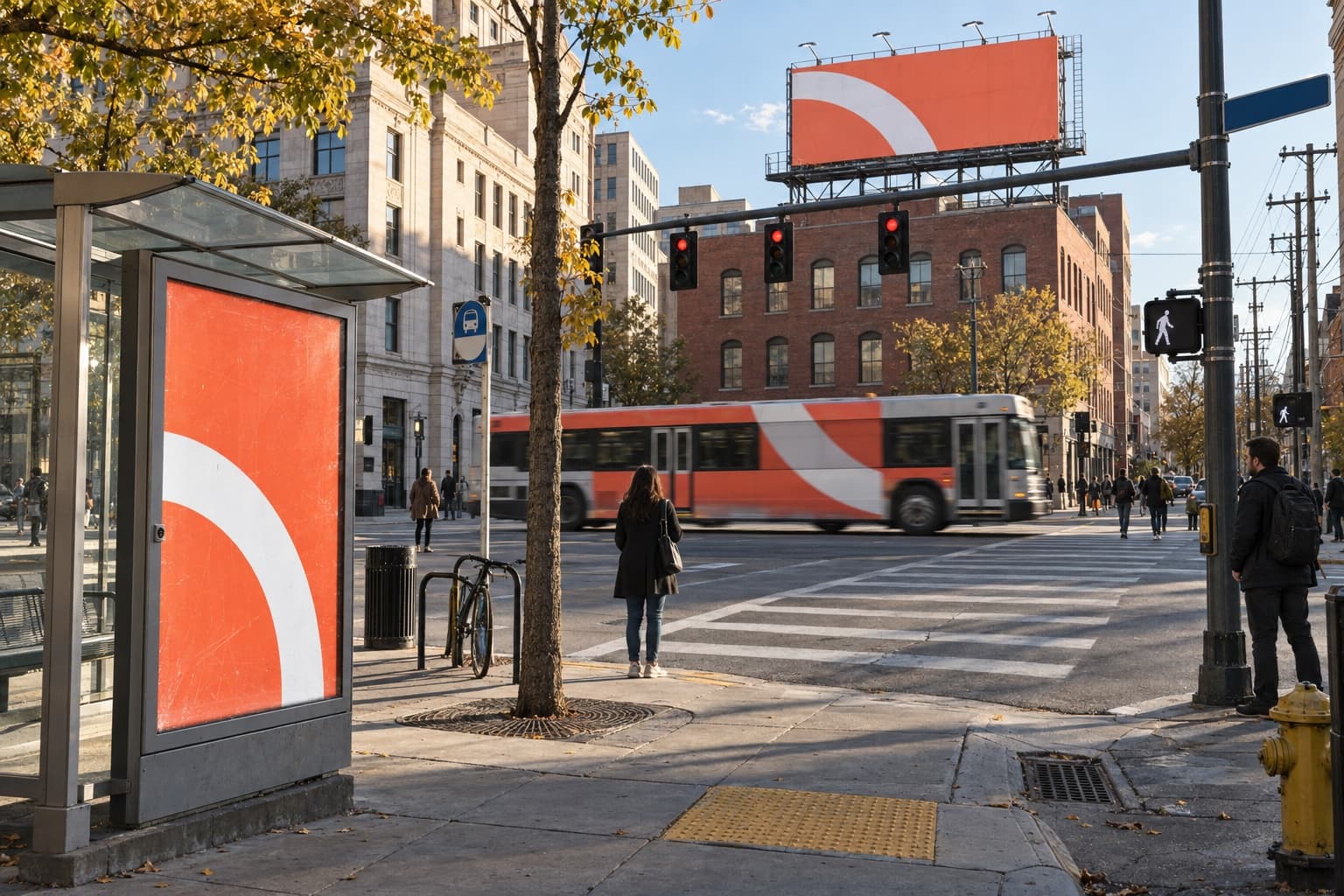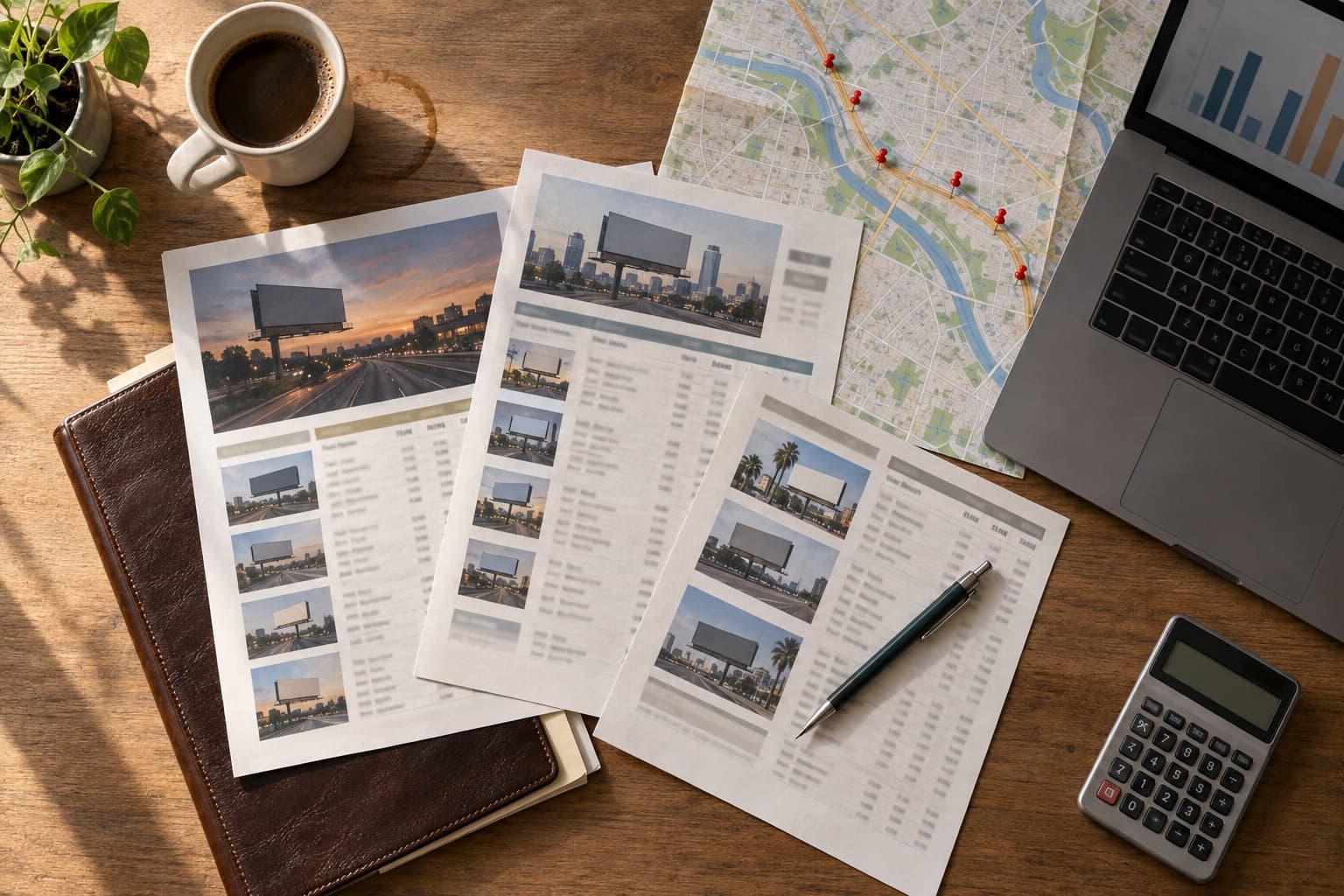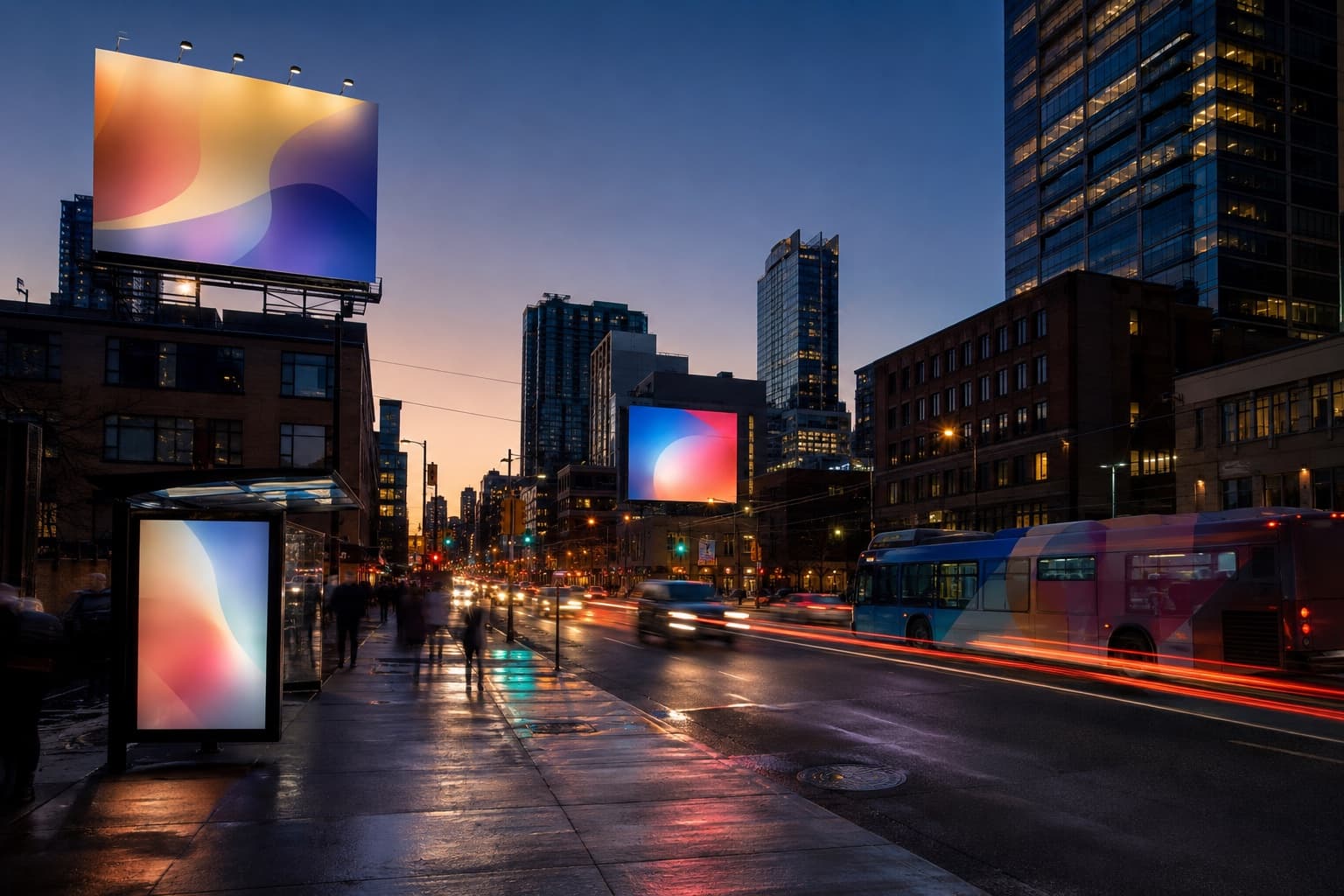
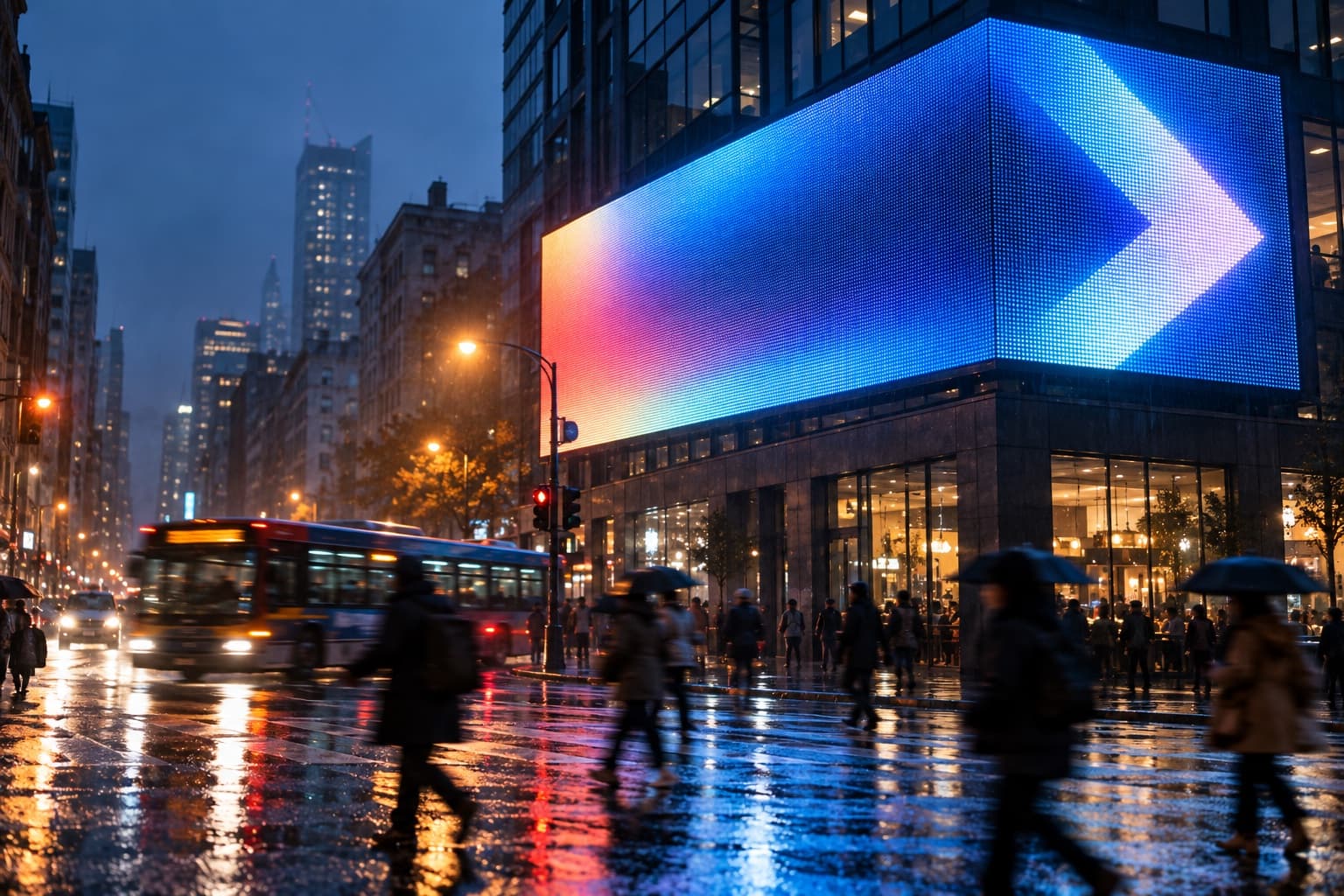
DOOH advertising is the digital, screen-based side of out-of-home media — the subset of billboards, street furniture, and transit displays that run on programmable screens instead of printed vinyl. Because those screens are digital, a DOOH campaign can be targeted by time, place, and audience segment in ways a static board never could, and it can be measured against impressions, dwell time, and downstream foot traffic instead of just a flight length. This guide covers how DOOH targeting actually works, how it's measured, and what to define before you plan a campaign.
What Is DOOH Advertising?
DOOH stands for digital out-of-home: the programmable, screen-based subset of out-of-home (OOH) media. A digital billboard, a digital transit shelter panel, or a screen inside a stadium concourse all qualify, because each can rotate creative on a schedule instead of holding one printed design for a full flight. The distinction that matters for planning is simple — a static structure is bought for a fixed run and can't change mid-flight, while a digital screen is bought as a slice of time on that screen, which is what makes targeting and measurement possible in the first place.
How DOOH Targeting Works
Targeting on a digital screen happens through the buy, not through tracking an individual viewer. The most common levers are:
- Dayparting — scheduling creative for specific hours, so a coffee brand runs its morning-commute message at 7 a.m. and a different message at happy hour on the same screen.
- Weather and trigger-based creative — swapping creative automatically when a condition is met, like an umbrella ad activating on a rainy forecast.
- Geographic and market selection — buying specific screens, corridors, or neighborhoods instead of a blanket citywide package, so spend concentrates where the audience actually moves.
- Audience-based targeting — using aggregated, privacy-compliant mobility and demographic data to select which screens and dayparts index highest for a target audience, then buying programmatically through a demand-side platform (DSP) rather than negotiating each screen individually.
None of this identifies an individual passerby. It targets the screen, the time, and the place where the right audience is statistically most likely to be.
How DOOH Campaigns Are Measured
A digital screen has no click to count, so DOOH measurement works from a different set of inputs than a web campaign:
- Impressions are modeled, not counted one-to-one — vendors estimate audience size from traffic counts, dwell time, and a screen's visibility index (how far it's seen from, at what angle, and for how long).
- Proof-of-play logs confirm a spot actually aired in its scheduled slot, which is the DOOH equivalent of a delivery report.
- Foot traffic attribution measures whether people who were exposed to a screen later visited a relevant location, using aggregated mobility data compared against a control group that wasn't exposed.
- Brand lift studies survey exposed versus unexposed audiences to measure movement in awareness or intent, useful when the campaign goal is brand-building rather than an immediate visit.
The right measurement mix depends on the objective set before the campaign launches — a launch campaign optimizing for reach reports differently than a retail campaign optimizing for store visits.
Formats You Can Target and Measure
Not every out-of-home format carries the same targeting and measurement options. Digital billboards, digital street furniture, and digital transit and place-based screens all support dayparting and programmatic buying; static formats don't. For a full breakdown of how these formats compare on cost and reach, see types of outdoor advertising and how much a billboard costs.
Planning a DOOH Campaign: What to Define First
Before a DOOH buy goes out, define four things: the objective (awareness, foot traffic, or both), the audience and markets, the dayparts and screens that reach them, and the measurement plan that will prove it worked. Deciding measurement after the campaign launches means settling for whatever the vendor happened to log, instead of the data that actually answers the question you started with.
Frequently Asked Questions
Is DOOH the same as a digital billboard? A digital billboard is one format of DOOH. DOOH also covers digital street furniture, transit displays, and place-based screens — any screen-based out-of-home format that can be scheduled and rotated programmatically.
Can DOOH be bought programmatically? Yes. A growing share of DOOH inventory is available through demand-side platforms, which let a buyer purchase specific screens and dayparts in real time rather than negotiating a full flight upfront.
How is DOOH different from a digital ad on my phone? DOOH targets a screen and a place, not an individual device, and it's measured through aggregated audience and mobility data rather than a per-user click or cookie.
What size budget does DOOH need? It scales from a handful of screens in one neighborhood to a multi-market programmatic buy, since inventory can be bought by the screen and daypart rather than only as a full-market package.
Ready to plan a DOOH campaign for a specific market and date range? Start a campaign plan or talk to Swing Media directly.