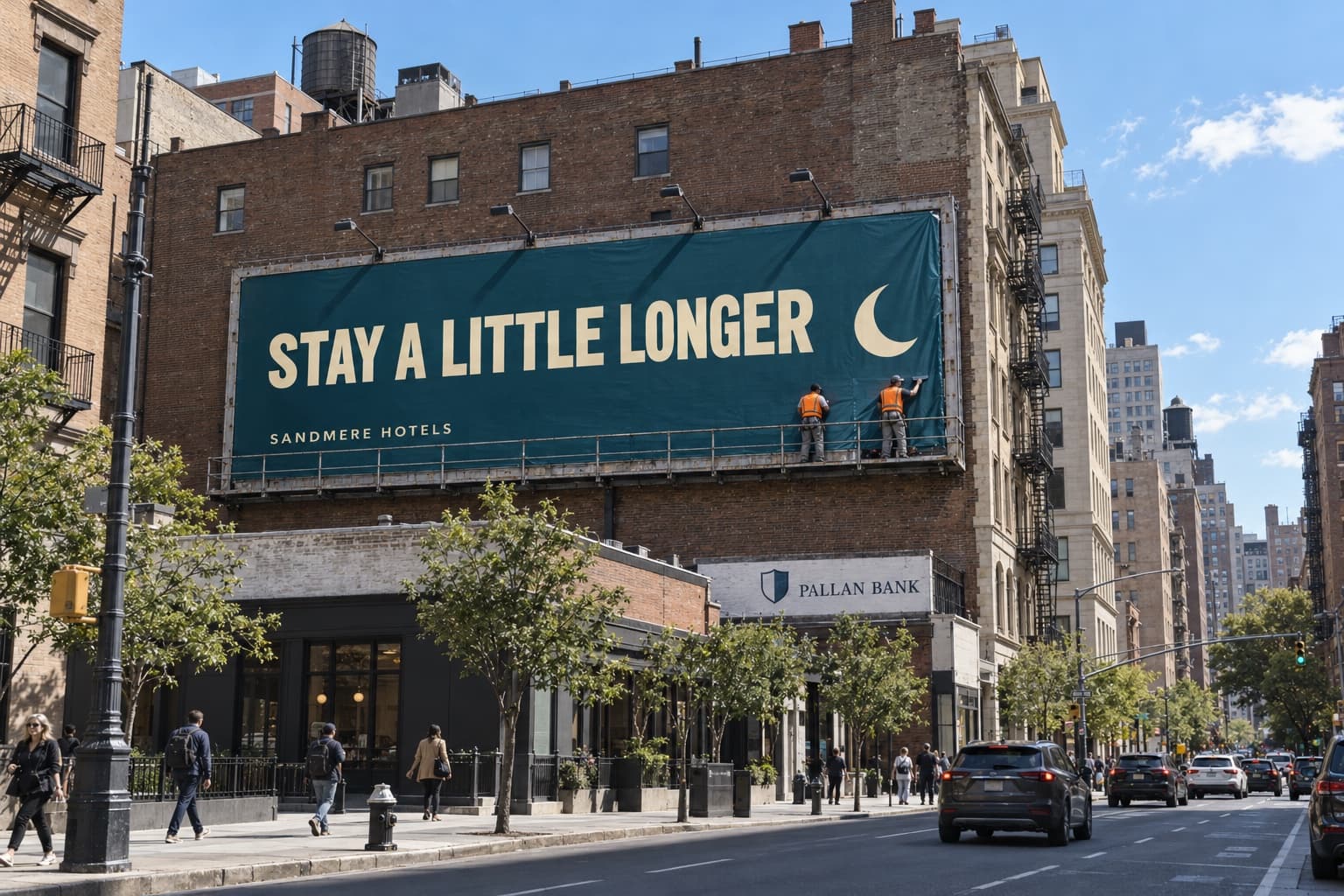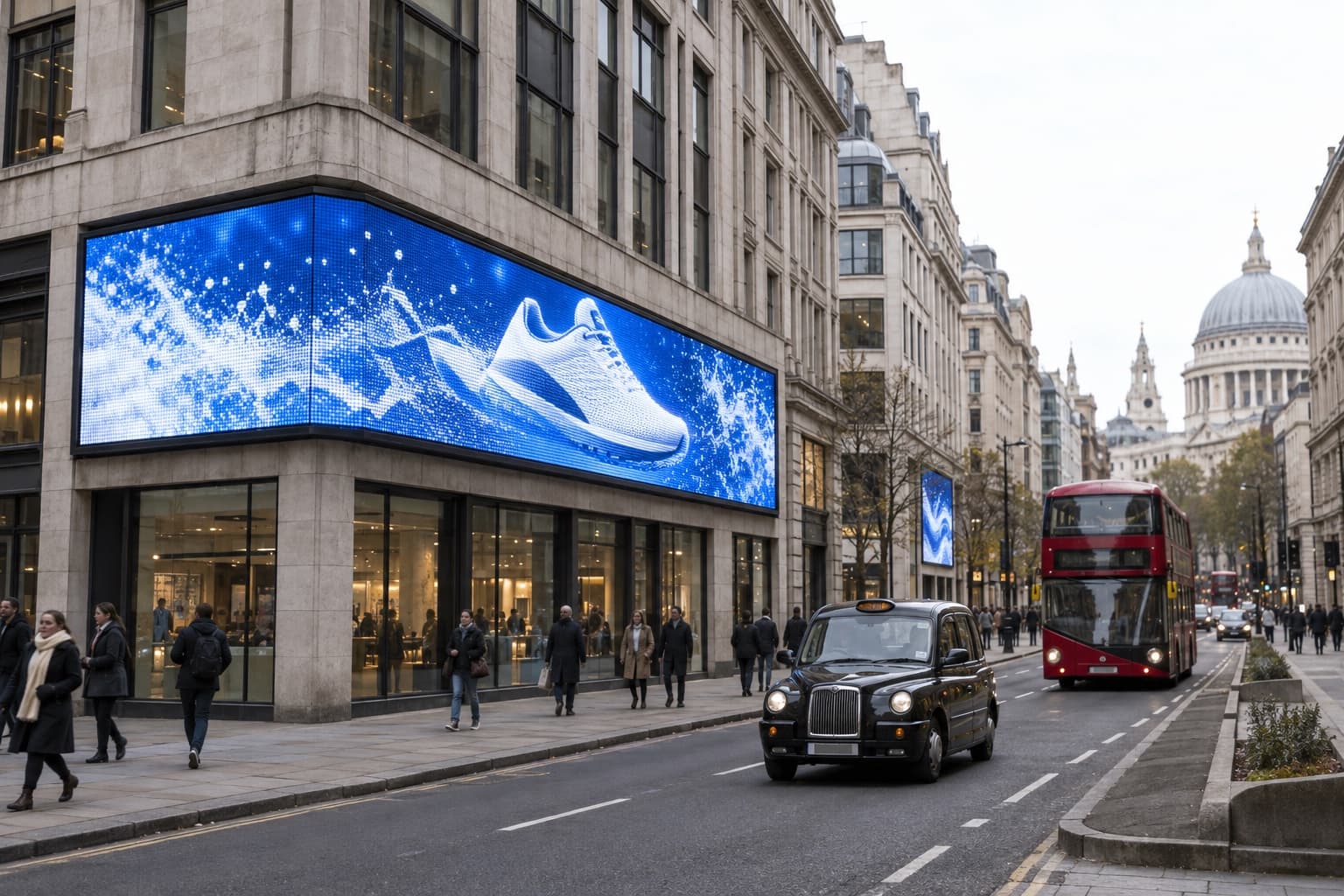
A Times Square billboard does not price anywhere near the ranges in the general billboard cost guide. The square itself is the most extreme location variable in all of out-of-home advertising, nearly every board in it is digital rather than static, and the few hundred feet of the "Bowtie" core command a premium that the rest of Manhattan doesn't. There is no honest flat number to quote here — the real price depends on which screen, how much of its rotation you're buying, and for how long — but the variables that set it are the same ones that set any billboard's price, just pushed to their extreme.
Why Times Square Breaks the National Average
How Much Does a Billboard Cost? explains that market and location are the two variables that move a billboard's price the most. Times Square is what happens when both of those variables are maxed out at once: it sits inside the country's largest media market, on a stretch of street built around some of the highest pedestrian and vehicle traffic counts anywhere in the world. A board that would be an ordinary bulletin rate a few blocks away becomes something else entirely once it's facing the Bowtie.
That's also why a single published "Times Square billboard price" doesn't really exist. Operators price each screen on its own visibility, size, and position within the square, so two boards a block apart can carry very different rates even before duration or rotation share enter the conversation.
Nearly Every Board Here Is Digital
Walk the square and you'll notice almost nothing is a static poster or bulletin. The format mix here skews almost entirely to large digital displays, and that matters for pricing before market or duration even come up, because static and digital bill very differently. A static board is sold as one exclusive face for the length of a flight. A digital screen in Times Square is almost always sold as a rotation — a share of the loop, not the whole screen — which is the pricing model that actually governs most of what's quoted here.
What Actually Sets the Price
The published "ranges" that circulate online for Times Square are mostly guesses, because the real number is built from a short list of variables:
- Position within the square. The Bowtie core — the stretch tourists photograph — prices higher than the periphery of the district, independent of screen size.
- Screen size and prominence. A full-building spectacular commands a different rate than a mid-size panel, even on the same block.
- Rotation share. Most Times Square inventory sells as a loop. A shorter loop or an exclusive slot costs more than a share split with several other advertisers.
- Flight length. As with any billboard, a longer booking typically lowers the effective daily or monthly rate; short, opportunistic flights usually carry a premium.
- Creative production. Digital creative still needs to be built and encoded to the screen's exact specs — there's no printing cost, but there is a production cost.
- Agency and placement fees. A buy arranged through a media-buying agency often carries a service fee on top of the media rate itself, the same as any other OOH placement.
- Seasonal demand. Dates tied to major cultural moments in the square — New Year's Eve chief among them — see rates firm up the way any finite, non-storable inventory does around a known high-demand date.
How to Budget for a Times Square Placement
A realistic budgeting process looks less like checking a rate card and more like this:
- Settle the objective and dates first. A Times Square placement timed to a launch moment or a major date in the square is a different buy than an open-ended awareness flight.
- Decide whether a shared rotation or an exclusive slot fits the goal. A loop share is the more common, more affordable way into the square; an exclusive slot or a full-building takeover is a different budget entirely.
- Ask for the rate at the flight length you actually intend to run, not the rate quoted for a longer commitment — the two can differ meaningfully.
- Budget creative production separately from media, since digital encoding is usually quoted apart from screen time.
- Ask what's included in the quote — proof-of-play reporting and any added-value loop positions are worth confirming before comparing one quote to another.
Frequently Asked Questions
Is there an average price for a Times Square billboard? Not a meaningful one. Published "average" figures for Times Square circulate widely online, but pricing here is set screen by screen, position by position, which is why operators quote it directly rather than off a card.
Can a smaller business buy into Times Square? Loop-share digital inventory is the more accessible entry point than an exclusive slot or a building takeover, since it splits the cost of the screen across several advertisers' rotations.
Are there still static billboards in Times Square? The inventory here is overwhelmingly digital. A static board is the exception rather than the rule in this specific stretch of the city.
Why does Times Square cost more than other dense parts of New York? The same variables that drive any billboard's price — traffic, dwell time, visibility — are pushed further here than almost anywhere else, and the square's cultural status adds a premium on top of the traffic numbers alone.
Get a Real Number for Times Square
Every variable above explains how Times Square pricing works in general — it isn't a substitute for a quote on a specific screen and specific dates. Swing Media has planned outdoor advertising campaigns since 1998, across twelve major cities and more than 400 premium sites. Talk to Swing Media about a specific placement, or see the full range of services.