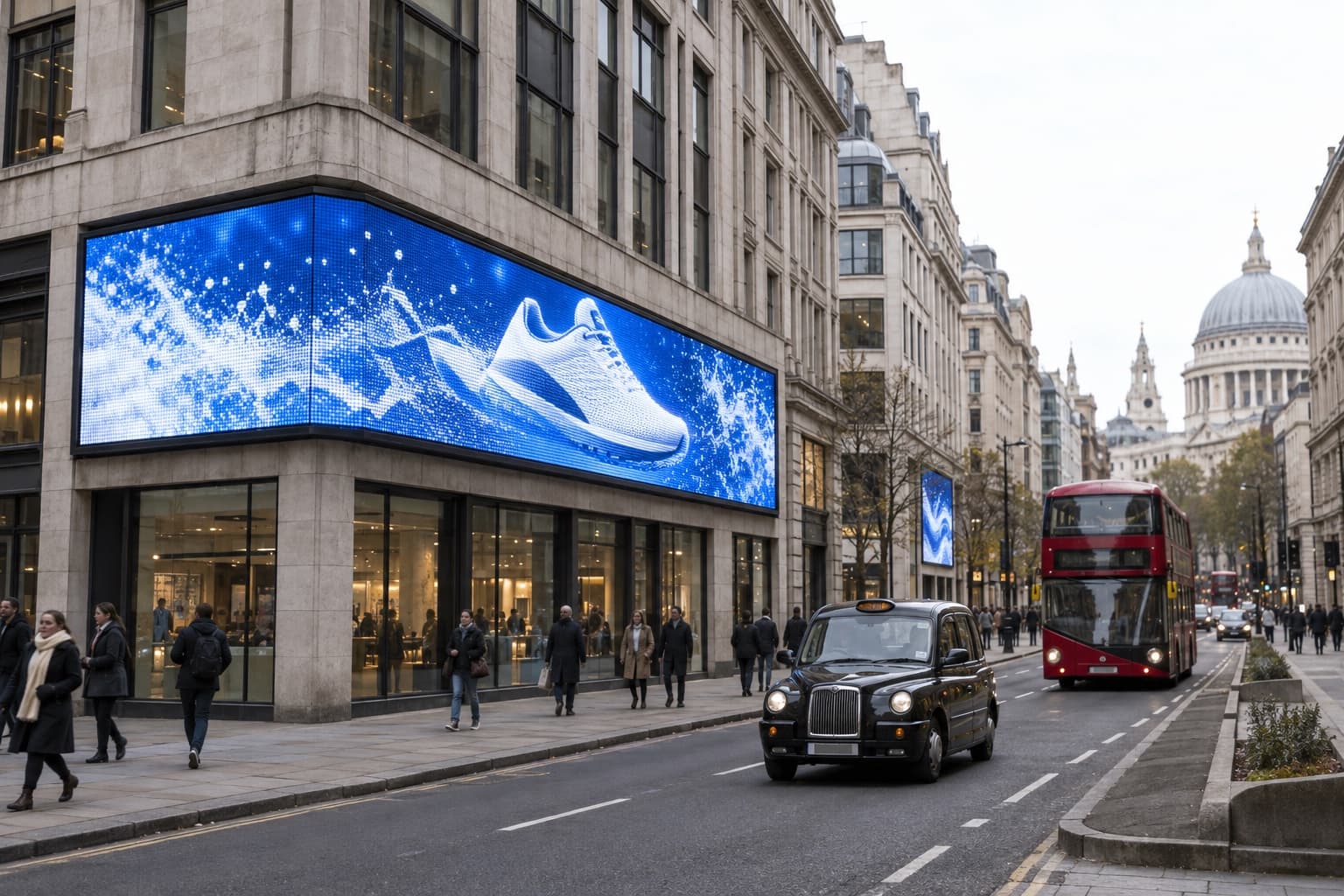
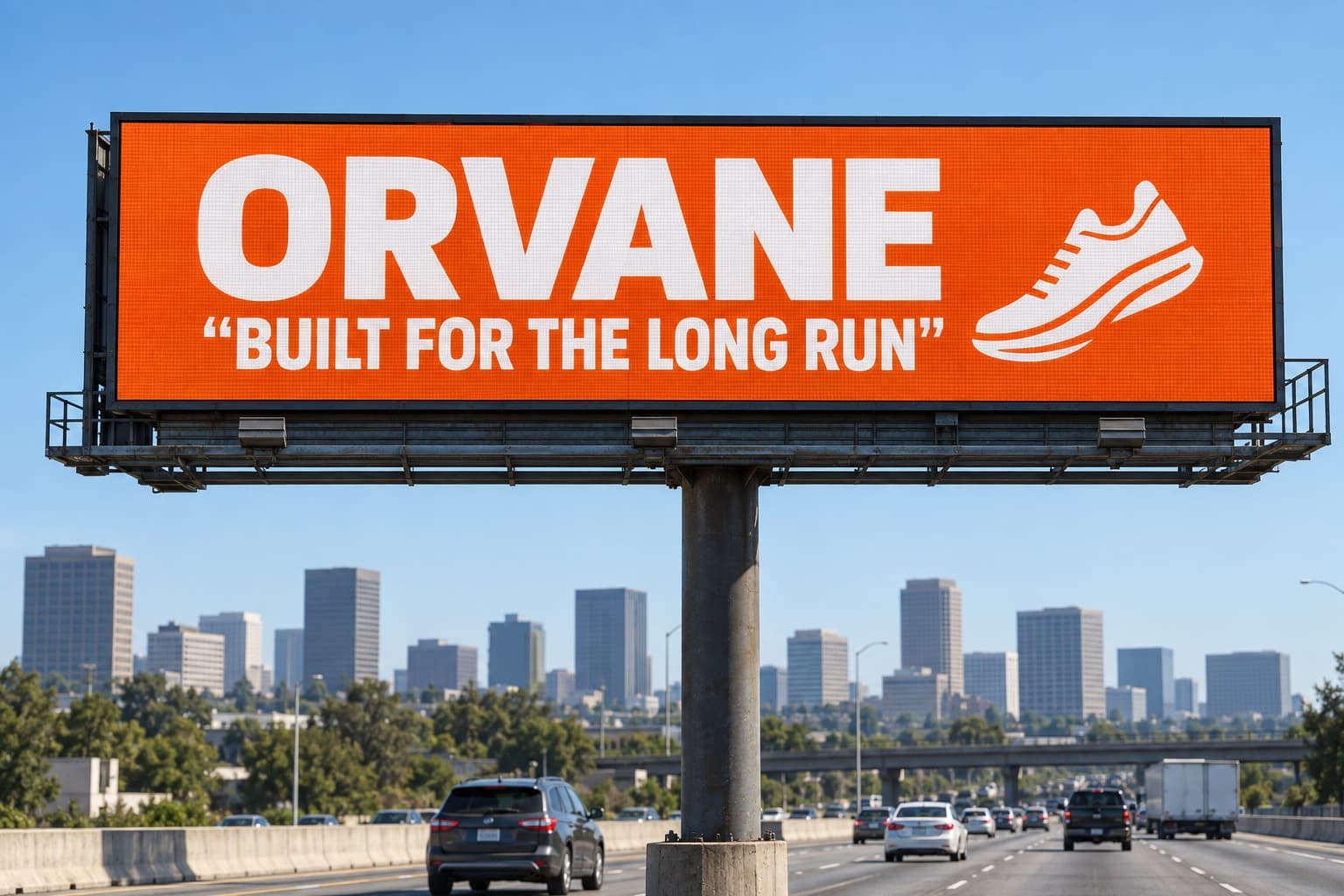
Inspiration for digital billboard designs usually starts in the wrong place — a static print ad resized down to billboard dimensions and nothing else. A digital billboard is a different medium: it shares its screen with several other advertisers in rotation, competes with real traffic for a few seconds of attention, and often needs to change creative by daypart or by location. The designs that work on a digital face are built for that medium from the first sketch, not adapted to it afterward. Here's what separates a digital billboard design that gets noticed from one that gets scrolled past at 45 mph, plus concrete creative directions worth briefing for a campaign.
Where Inspiration for Digital Billboard Designs Should Start
A printed bulletin holds one advertiser's message for a full flight, so a design only has to work once. A digital billboard shares its screen with several advertisers in rotation, and the loop keeps moving whether or not a driver caught your slot. That changes the design brief before a single visual decision gets made: the creative has to register inside a few seconds, hold up next to whatever ran in the position before it, and often needs more than one version if the message changes by time of day. For how digital sits against static formats and the rest of the category, see types of outdoor advertising.
Design Principles for a Digital Billboard That Reads in Seconds
A design built for a moving audience follows a short list of rules more than it follows a style:
- One message, one visual anchor. A digital board is not the place for a second idea, a secondary offer, or a logo lockup with four lines of fine print. Pick the single thing the board needs to communicate and build the whole frame around it.
- Order the hierarchy for how fast each part reads. A driver reads color and shape before a headline, and a headline before body copy. Put the highest-value information — the brand, the offer, the single word that carries the idea — in whatever reads first.
- Contrast does the work typography can't. A dark mark on a light field, or the reverse, reads from further away than a clever color pairing with similar values. Save subtlety for a format a viewer can study up close.
- Size type to the viewing distance, not the screen. A line that looks readable on a laptop preview can disappear at highway speed. Request the board's real viewing distance before finalizing type size, not after the art is approved.
- Treat motion as a tool, not a default. Where a location allows animation, use it to draw the eye to one thing — a transition, a reveal — rather than to animate everything at once. Constant motion on every element competes with itself.
Creative Directions Worth Briefing
A few approaches come up often enough in digital billboard planning that they're worth considering before a design brief is finalized:
- Dayparted creative. Run a different message for the morning commute than the evening one, if the schedule supports it — a coffee line at 7am reads differently than the same board at 7pm.
- Triggered or conditional creative. A design that changes with a real condition — weather, a live countdown, a score, an inventory level — earns the extra production cost only when the condition is doing real work in the message, not as a gimmick.
- Sequential creative across a corridor. If a campaign holds more than one digital face along the same route, a design that continues an idea board to board reads as a single story rather than three unrelated impressions.
- One market-specific line. A single piece of locally specific copy — a neighborhood name, a local reference — on an otherwise national design can outperform a fully generic version in that market.
Format and Regulation Rules That Shape the Design
The design brief has to account for what the specific structure allows before the first concept is drawn, not after. Loop length, how many advertisers share the rotation, and whether motion or video is permitted at all vary by structure and by jurisdiction — some roadside locations require static images with instant transitions and a minimum dwell time, and the content and brightness rules that govern dayparted or triggered creative are set at the same local level. DOOH advertising covers how that targeting and scheduling layer actually works, which is the layer a conditional design depends on.
Briefing a Design So It Survives the Loop
The design and the media buy are usually briefed separately, and that's where good concepts get lost — a design finished without the board's specs ends up redone, late, on a schedule that doesn't move. Confirm the creative specifications, the motion and content rules, and the loop length for the specific structure before the design starts, not after it's approved internally. If the plan calls for dayparted or triggered variants, brief every variant at the same time as the base design, so the production schedule accounts for all of them rather than treating the second version as an afterthought. A planner who can speak to both the format and the creative brief at once is how that handoff stays on schedule — see the full range of planning and placement services this covers.
Frequently Asked Questions
Does a digital billboard design need to be different for every market? Not entirely. A strong design concept usually travels, but the type size, motion rules, and loop length it has to work within can differ structure by structure, so the production file often needs market-specific adjustments even when the creative idea stays the same.
Can the same creative run as both a static and a digital billboard? It can be adapted, but rarely works unchanged. A static design is built to be studied; a digital design is built to register in a few seconds and often shares the screen, so most creative needs real changes to hierarchy and pacing to work on both.
How much text can actually fit on a digital billboard? Less than most first drafts assume. A single short phrase plus a brand mark is usually the practical ceiling for anything read at speed; longer copy belongs on a format where the audience has time to read it, like a shelter panel or a wallscape.
Who approves the creative before it runs on a digital board? The structure's operator typically reviews the file against the location's content, brightness, and motion rules before it's scheduled into the loop, which is why confirming those rules before the design is finished saves a late rework.
Ready to brief a digital billboard design against real inventory and real market rules? Plan a campaign with Swing Media or talk to Swing Media directly.