What Is an Outdoor LED Sign?
An outdoor LED sign is a digital out-of-home display built from a grid of light-emitting diodes instead of printed vinyl. Because the image is generated electronically, one structure can rotate through several advertisers in a loop, change creative by daypart, and update a message in minutes rather than the days a print change takes. For a media planner, that single difference is what separates a "digital billboard" conversation from a traditional one: the inventory is the same real estate, but the buying and creative rules around it change.
The Main Types of Outdoor LED Signs
Outdoor LED signage spans a few distinct formats, and the right one depends on where the audience actually is:
- Digital billboards — full-size bulletin or poster structures converted to LED, usually along highways and major arterials, built for a driving audience and a short dwell time.
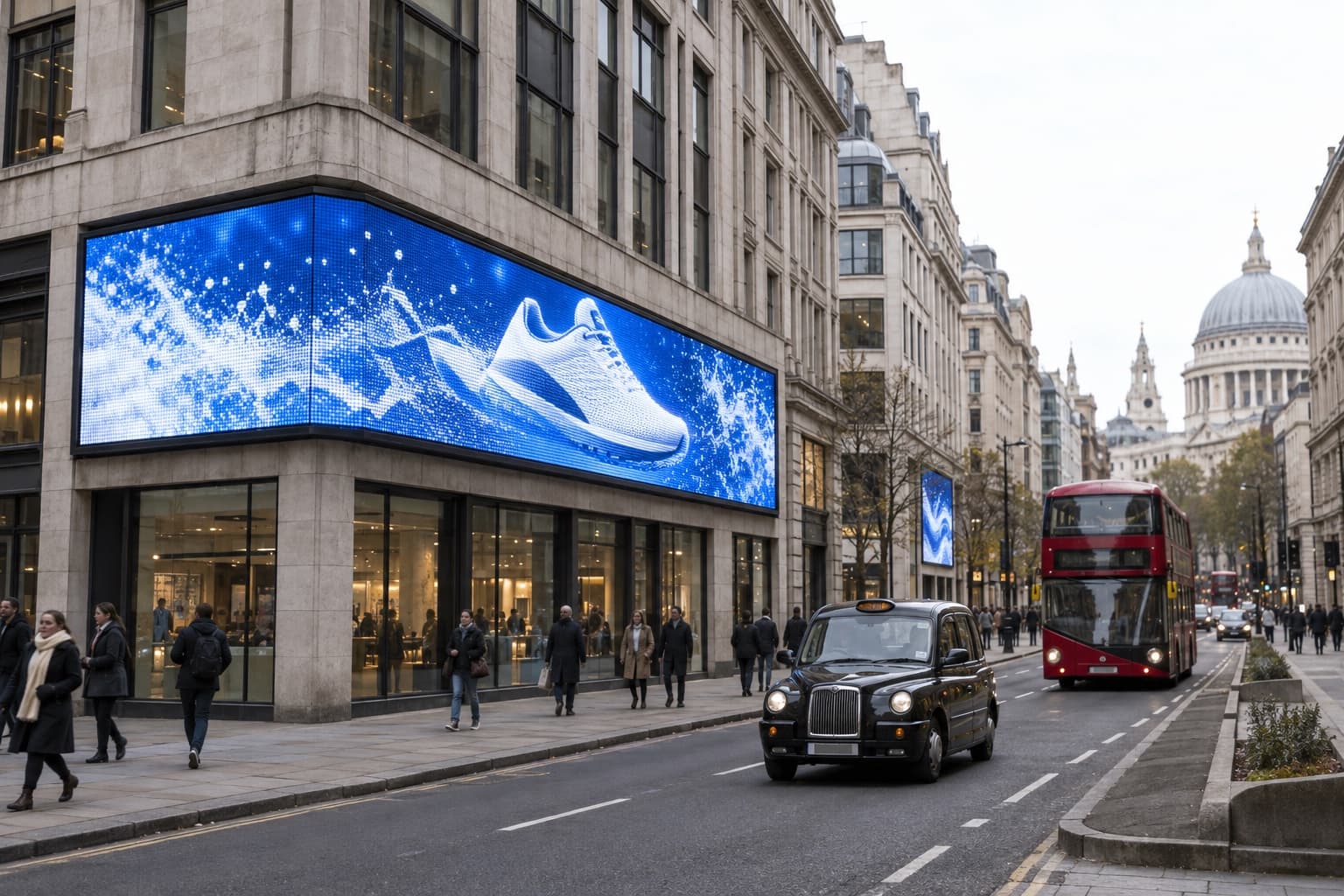
- Urban digital faces — building-mounted or spectacular-scale LED panels in dense downtown corridors, built for pedestrian and street-level dwell time, often wider than tall and visible from multiple approach angles.
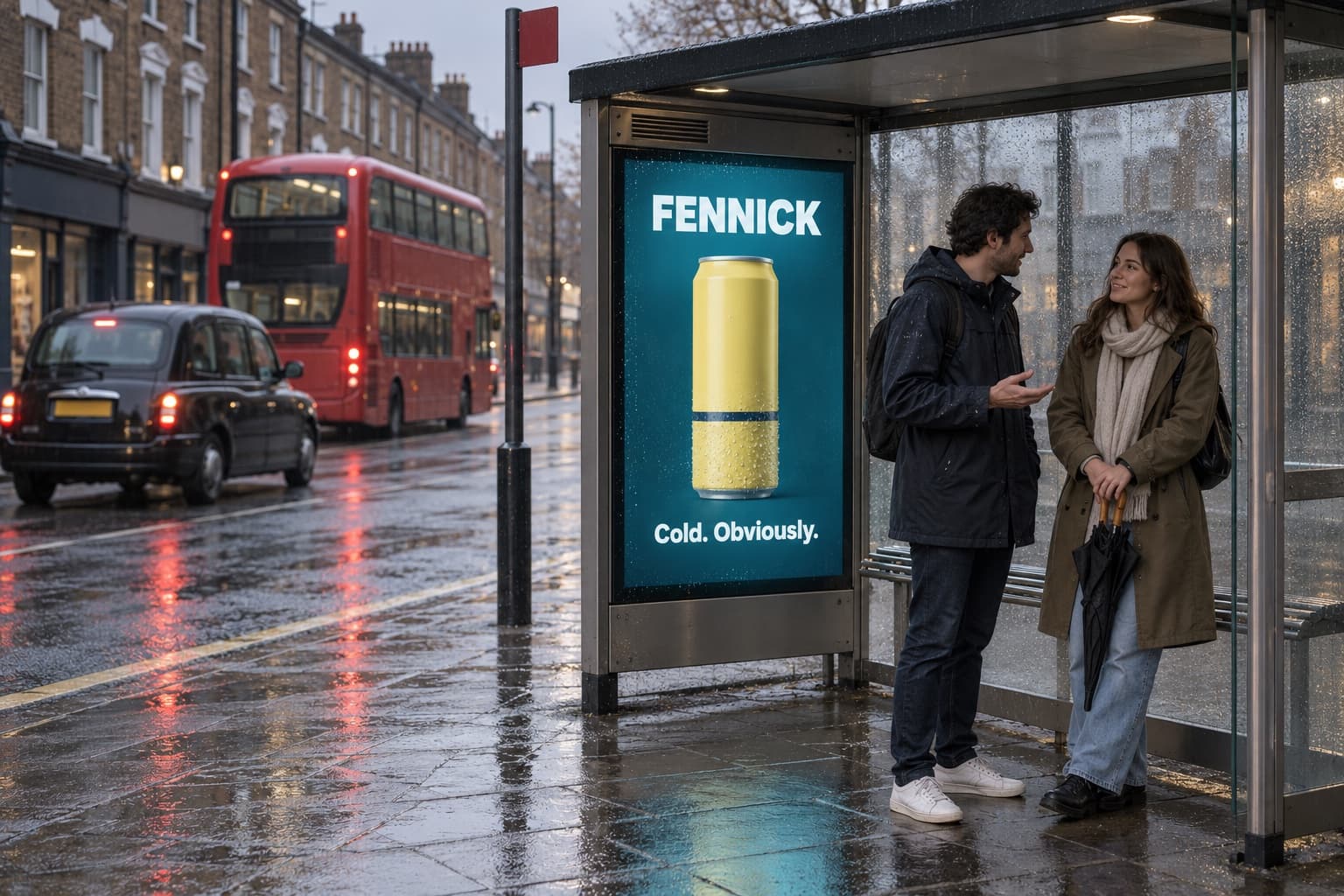
- Transit and street-furniture LED units — smaller digital panels at bus shelters, rail platforms, and street furniture, close to the audience and typically running shorter, simpler creative.
Each format has its own viewing distance, dwell time, and loop behavior, and that's what should drive the creative and the format choice — not just which one looks the most impressive.
How Outdoor LED Signs Are Priced for Advertisers
Pricing on an LED sign is built around the loop, not the structure. A handful of variables set the rate:
- Loop length and share of voice — how many advertisers share the screen in rotation, and how many seconds each one gets per loop.
- Dwell time and traffic — a corridor with slower-moving or pedestrian traffic can support a longer message than a high-speed highway approach.
- Dayparting — rates can flex by time of day, letting a planner buy only the hours that match the campaign's audience.
- Format and location premium — a downtown urban digital face in a dense corridor commands a different rate than a highway digital bulletin, independent of loop length.
The result is a price that's less "one flat number" and more a set of levers a planner can pull to match a budget to an audience.
Planning a Campaign on Outdoor LED Signs
The planning work on LED inventory looks different from a static buy. Because creative can rotate and change by daypart, a planner is deciding not just where to run, but how the message should change across the loop, the time of day, and the format. A single piece of static key art rarely survives the move to digital unchanged — it needs a version built for a shorter dwell time, and often a second version for a slower, closer-viewing format like an urban digital face versus a highway bulletin. That's planning work specific to digital out-of-home, and it's where a media buyer earns the placement rather than just reserving it.
FAQ
Is an outdoor LED sign the same as a digital billboard? A digital billboard is one type of outdoor LED sign — the highway-scale bulletin or poster structure converted to LED. "Outdoor LED sign" is the broader category that also covers urban digital faces and transit-level digital panels.
How many advertisers share one LED sign? It depends on the market and the structure's loop length, but digital out-of-home inventory commonly rotates several advertisers through a shared loop, each getting a set number of seconds per rotation.
Does creative need to be different for an LED sign versus a printed billboard? Usually, yes. A static print design doesn't always translate directly — digital formats favor simpler compositions built for a shorter dwell time, and the loop and daypart behavior often call for more than one version of the creative.
Can an LED sign be bought for only part of the day? On many digital structures, yes — dayparting lets a buyer target specific hours rather than a full-day flat rate, which is one of the planning levers unique to digital out-of-home.
Outdoor LED signs are one part of a much larger digital billboard landscape — see the guide to digital billboards for how the technology and the buying model work end to end, or read more on DOOH targeting and measurement and the different types of outdoor advertising available to a planner. If you're ready to put a plan together, plan a campaign with Swing Media or get in touch to talk through your market and format options.