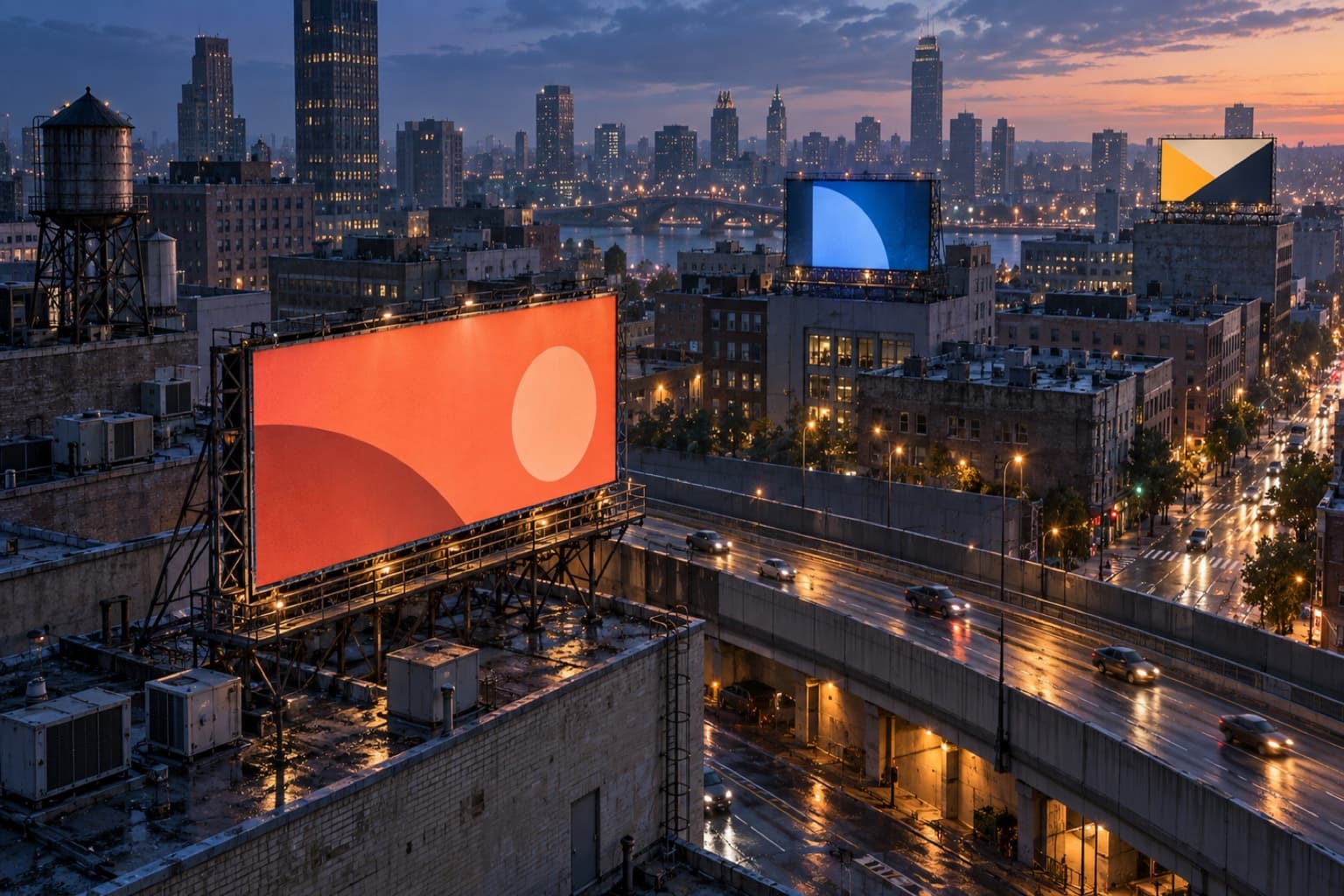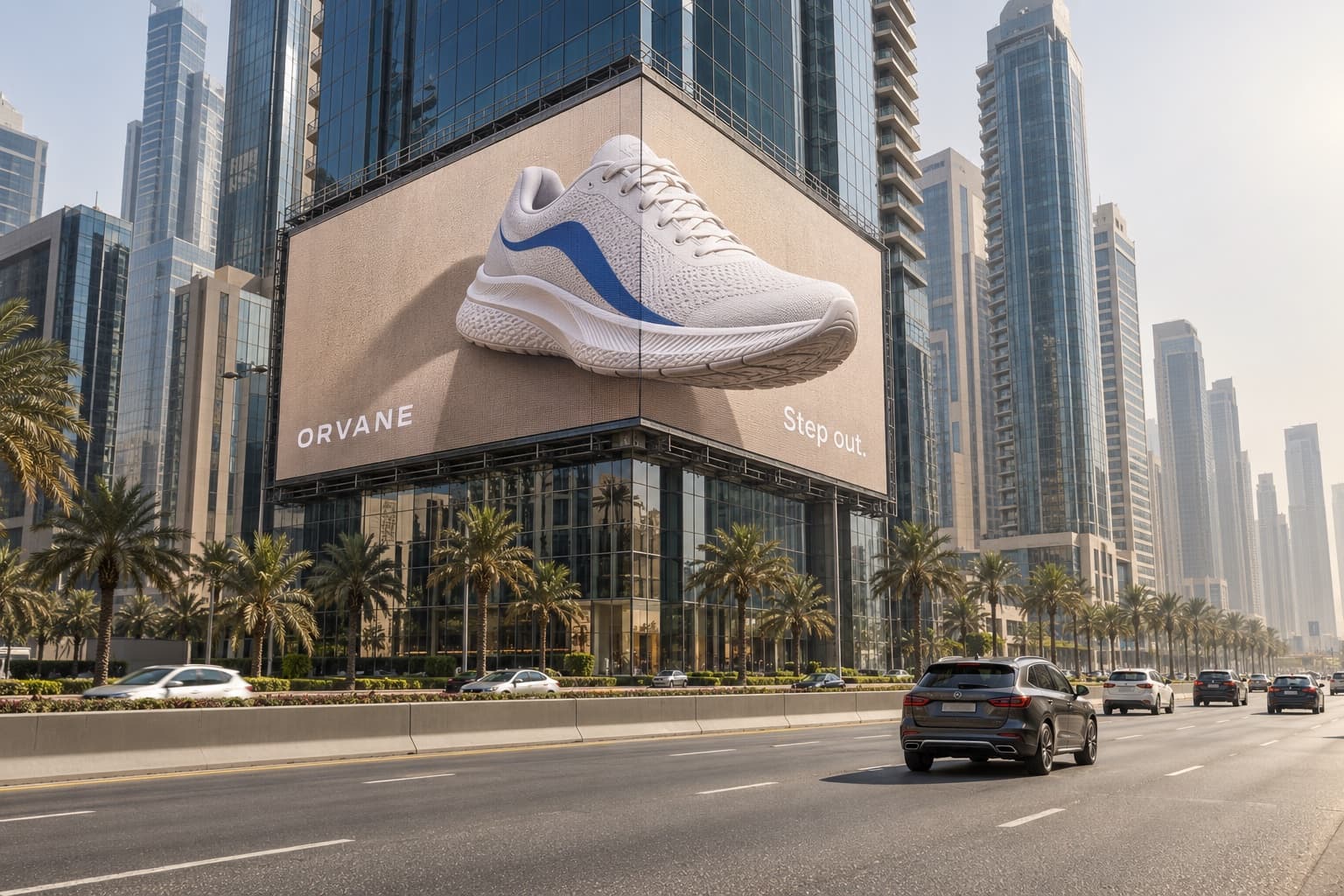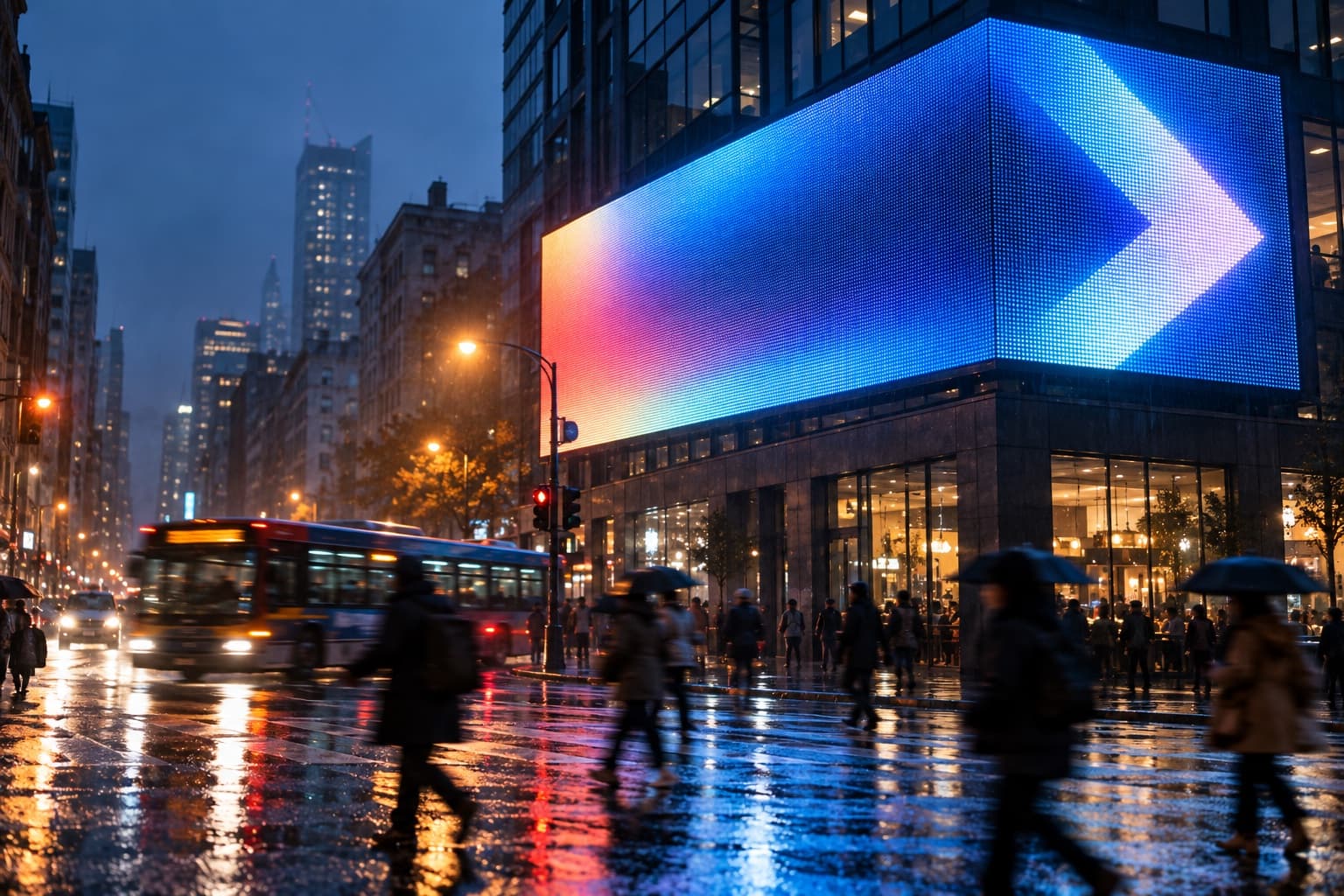
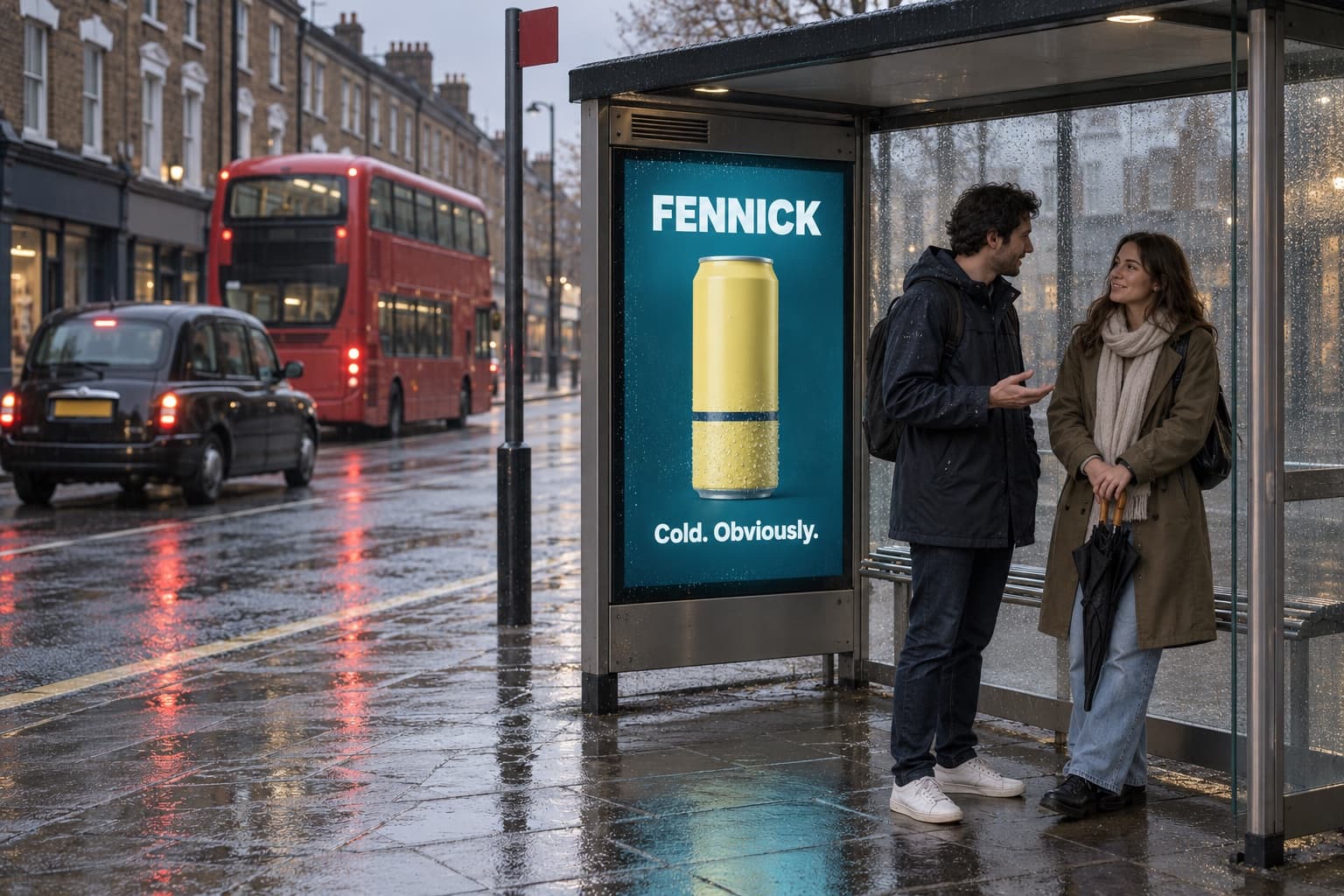
A digital billboard is an LED screen that shows a rotating sequence of advertisers on one structure, usually in eight-to-ten-second slots inside a sixty-to-ninety-second loop. You buy a share of that rotation rather than the face itself. That single difference is what drives everything else about digital billboards: what they cost, how quickly a campaign can launch, how often the creative can change, and what the operator can tell you about who saw it.
This guide covers how the format actually works, what moves the price, how the buy gets made, and where digital fits against the static formats it sits alongside.
What Digital Billboards Are, and How They Differ from Static
A digital billboard is a programmable LED display mounted on the same kind of structure a printed billboard uses — a roadside monopole, a building facade, a rooftop frame. The hardware differs from a television in ways that matter to a planner: the pixel pitch is coarse because the viewing distance is long, the brightness is far higher because the screen competes with daylight, and an ambient light sensor dims the face automatically after dark so it stays readable without blowing out.
The commercial difference is bigger than the hardware difference. A static bulletin is one advertiser's for the whole flight — the face is exclusively yours from install to takedown. A digital face is shared. Several advertisers occupy the same screen, each appearing for a fixed slot every time the loop comes around.
That shared model changes four things at once:
- Exclusivity. You are one of several brands on the structure, not the only one. Buying the entire loop is possible on most screens but priced accordingly.
- Creative flexibility. Artwork is a file, not a print run. It can be replaced remotely, on a schedule, without a crew or a reinstall.
- Lead time. There is no production and installation cycle. Once the creative is encoded and approved, it can be scheduled into the rotation.
- Reporting. The operator's playback system already logs what ran and when, so a digital buy reconciles against an actual play log rather than an estimate alone.
For how digital sits among the wider set of out-of-home formats, see Types of Outdoor Advertising and What Is an Advert Display?; for the broader category definition, see What Is OOH Advertising?.
How the Loop Works: Slots, Share of Voice, and Dayparting
The loop is the unit of inventory on a digital board, and understanding it is the difference between buying a screen and buying an outcome.
The slot and the loop. A typical rotation gives each advertiser an eight-to-ten-second slot inside a sixty-to-ninety-second loop. Divide the loop length by the slot length and you get the number of positions on the screen. Your share of voice is your positions divided by the total — one slot in a six-slot loop is roughly a sixth of the screen's total exposure, and appears about once a minute for as long as the board is operating.
Why share of voice matters more than the location alone. Two buys on the same premium structure can perform very differently if one holds a single slot and the other holds three. When comparing quotes across operators, normalise them to share of voice and daily operating hours before comparing the price — a cheaper board with half the rotation share is not cheaper.
Dayparting. Because the schedule is software, a digital billboard can run different creative, or run only at all, in defined windows: a breakfast message from 6am to 10am, a different one for the evening commute, nothing overnight. Dayparting concentrates budget on the hours the audience is actually in front of the board rather than spreading it evenly across a full day.
Triggered and conditional creative. The same scheduling layer allows creative that changes with an external condition — weather, a sports result, inventory levels, a countdown. This is genuinely useful when the message depends on the condition, and pointless when it does not. It is worth paying for only when the variable is doing real work in the message.
What Digital Billboards Cost, and What Moves the Price
There is no single rate for digital billboards, because the price is assembled from several independent variables. These are the ones that move it most:
- Market. The same physical format costs very differently in a top-five metro than in a mid-sized city. Market is usually the largest single factor in the quote.
- Location within the market. Traffic volume, approach distance, sightline, dwell time at the signal, and whether the board faces the dominant direction of travel. A board on the inbound side of a commuter corridor is worth more than the same structure facing outbound.
- Share of voice. How many slots in the loop you hold, as above.
- Flight length. Digital is commonly sold in four-week increments, and shorter tactical flights usually carry a higher effective rate than a sustained run.
- Daypart and hours. A restricted, high-value daypart is priced differently from full operating hours.
- Screen size and specification. A large-format bulletin and a street-level digital panel are not comparable inventory even in the same market.
Production is where digital saves money against static. There is no vinyl to print, no crew to install, and no second print run if the message changes mid-flight — the cost of a creative change is the cost of making the new file. Against that, the media rate on a premium digital face is often higher per four weeks than an equivalent static face, because the structure is newer, better located, and can be sold several times over.
For a fuller breakdown of what a billboard buy actually costs across both static and digital, see How Much Does a Billboard Cost?.
How to Buy Digital Billboards: Direct or Programmatic
There are two routes, and they suit different campaigns.
Direct. You or your media partner negotiate with the operator that owns the structure: specific boards, specific slots, specific dates, at a negotiated rate. Direct is how you secure a named landmark location, an exclusive loop, or a package across a market. It is the right route when the location itself is part of the creative idea — a specific building, a specific intersection, a specific skyline.
Programmatic (pDOOH). Digital inventory is bought through a demand-side platform against audience and contextual parameters rather than named structures, often on an impression basis with automated bidding. Programmatic is strong for reach against a defined audience across many screens, for short flights, and for campaigns that need to start and stop quickly. It is weaker when a specific landmark placement is the point, because you are buying criteria, not addresses.
What to ask before signing, either route:
- What is the loop length and how many advertisers are in it?
- What are the board's operating hours, and does the rate assume all of them?
- What are the exact creative specifications — pixel dimensions, file format, animation rules, and whether motion or video is permitted at that location?
- Will I receive a play log or proof-of-posting report, and at what interval?
- What are the illumination and content restrictions at this location? Many jurisdictions limit brightness, dwell time and transitions on roadside digital faces, and those rules constrain the creative before anyone approves it.
That last point catches more campaigns than it should. Digital regulations are local, they vary by jurisdiction, and they are set at the structure level — the answer for one board tells you nothing about the next one down the road.
Where Digital Billboards Fit in a Campaign
Digital is not a replacement for static. It is a different instrument, and most strong out-of-home plans use both.
Static earns its place where the job is sustained, unavoidable presence: a long flight on a high-traffic corridor, a wallscape that becomes a landmark for a quarter, a face nobody else shares. Digital earns its place where the job needs speed or variability: a launch window, a tour or fixture schedule, a promotion with an end date, a message that has to differ by daypart or by market.
The practical planning sequence is the same either way. Define the audience and the geography first, then the flight and the message cadence, and let those two decide the format. Choosing digital first and then working out what to say with it is how budgets end up funding capability nobody uses.
Swing Media has planned out-of-home campaigns since 1998, across twelve major cities and more than 400 premium sites. That footprint is the reason the format conversation and the inventory conversation can happen together rather than in sequence — see the markets we serve for where that inventory sits.
Frequently Asked Questions
How long does an ad stay on a digital billboard? Each appearance is typically eight to ten seconds, repeating every time the loop comes around — usually every sixty to ninety seconds. Over a day that adds up to hundreds of appearances, which is why digital is measured by share of voice and operating hours rather than by a single exposure.
Are digital billboards more expensive than static ones? Not automatically. The media rate on a premium digital face is often higher, but you are buying a share of a rotation rather than the whole face, and production costs are lower because there is nothing to print or install. The comparison only works once both quotes are normalised to the same market, location quality, flight length and share of voice.
Can the creative be changed during a flight? Yes. Changing creative on a digital billboard means uploading and scheduling a new file, so it can happen mid-flight, on a daypart schedule, or in response to an external trigger. On a static face the same change requires a reprint and a reinstall.
Can video or animation run on a digital billboard? It depends entirely on the location. Many roadside jurisdictions require static images with instant transitions and a minimum dwell time, while screens in pedestrian and venue environments often permit motion. Confirm the rule for the specific structure before the creative is designed, not after.
How are digital billboard impressions measured? Impressions are modelled from traffic and pedestrian counts for the location, adjusted for visibility and the likelihood a passer-by actually sees the face, then applied to your share of the loop. The operator's playback log confirms what ran and when, which is what the modelled figure is applied to.
Plan a Digital Billboard Campaign
The format decision is worth getting right early, because it constrains the creative, the timeline and the budget behind it. Swing Media works across twenty formats — one landmark standard — from wallscapes and static bulletins to digital bulletins and street-level screens. Plan a campaign with Swing Media to see what digital inventory is available and priced for your market, dates and audience, or start with the full range of services.