
An advert display is any static or digital surface built to carry paid advertising — a billboard, a digital bulletin, a wallscape, an LED message board. The format changes how the ad reads, who sees it, and how the campaign gets planned.
The term covers a wider range than "billboard" alone. Anything mounted to hold a paid message in a public, high-traffic environment — printed or lit, fixed or rotating — is functionally an advert display. What differs between formats is the surface, the update mechanism, and the planning decisions each one forces.
What Counts as an Advert Display
Two things separate one advert display from another: whether the surface is static or digital, and how the ad is mounted and shown.
A static advert display is printed material — vinyl, paper, or paint — mounted to a fixed structure for the length of a flight. The advertiser buys the whole face, exclusively, for that period.
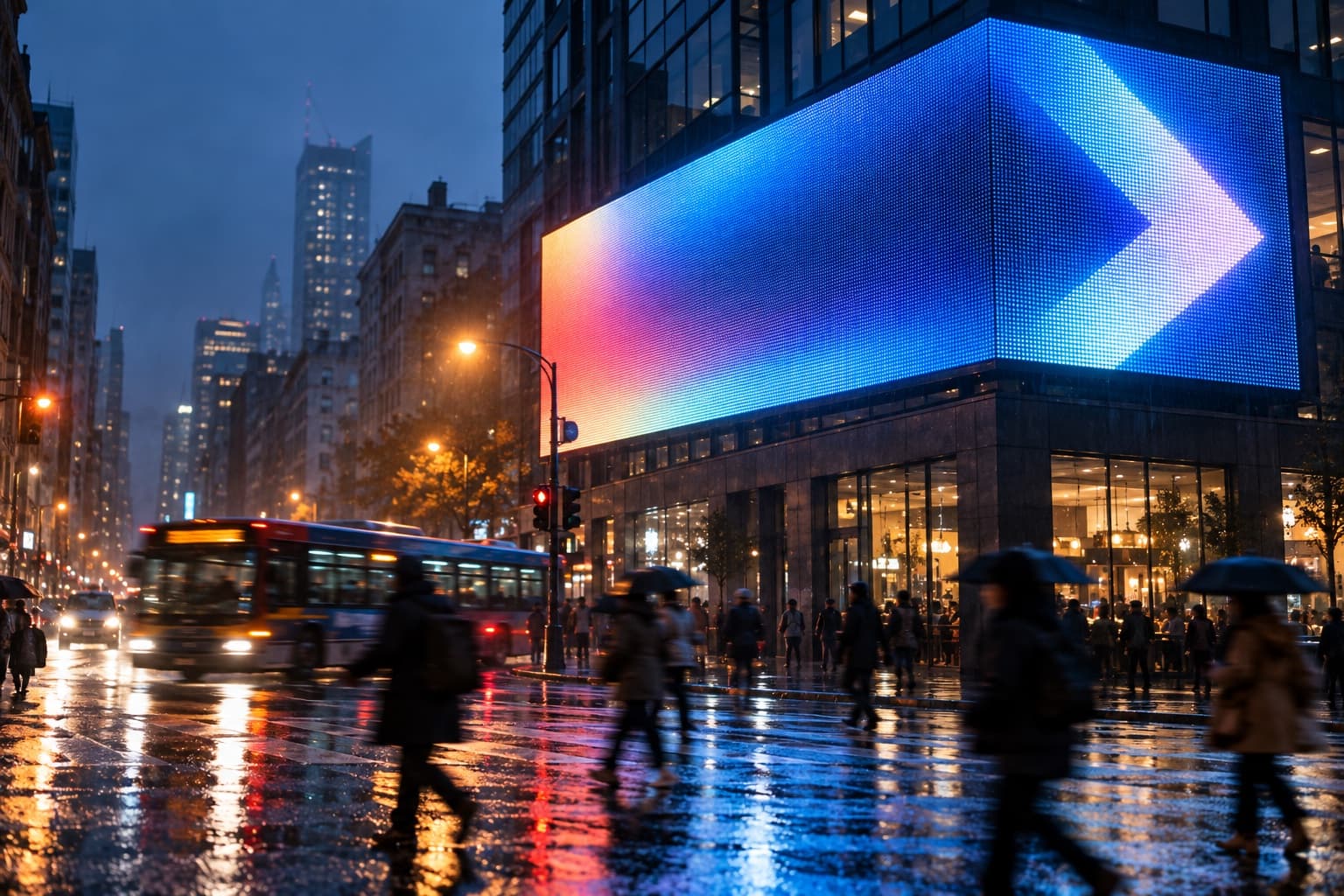
A digital advert display is a screen — usually LED — that shows a rotation of ads shared among several advertisers. The advertiser buys a share of the rotation, not the screen itself, and the creative can be swapped without a reprint or a reinstall.
Everything else — size, mounting, location type — is a variation on those two mechanisms.
Common Advert Display Formats
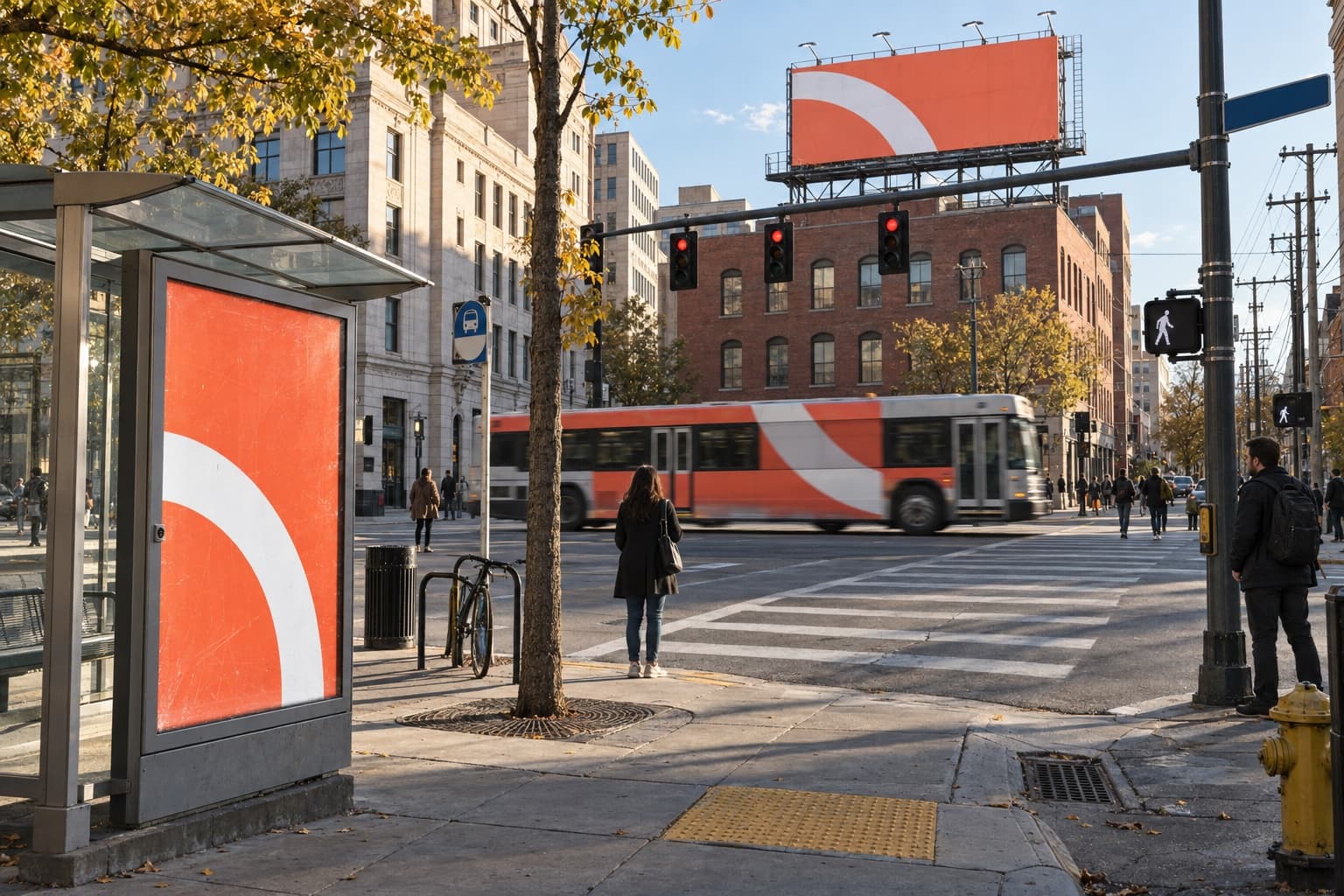
- Static bulletins and posters — the classic roadside billboard, sold as a single exclusive face for the flight
- Digital billboards and bulletins — LED screens on the same structures, sold as a rotating share
- Wallscapes and building wraps — large-format printed or vinyl displays applied directly to a building surface
- Digital signboards and LED message displays — smaller-format digital screens, often used at street level, in transit hubs, or inside venues
- Transit and street-level formats — bus wraps, bus shelters, and street furniture carrying either static or digital faces
Every format on that list is built to do the same job — hold a paid message in view of people who didn't seek it out — but the mechanism behind each one changes what a campaign can and can't do with it. For a fuller breakdown of formats beyond advert displays, see Types of Outdoor Advertising: A Complete Guide.
Static vs. Digital: What Changes in Planning
The static/digital split isn't just a production detail — it changes the planning conversation.
Exclusivity. A static display is one advertiser's for the whole flight. A digital display is shared: several advertisers rotate through the same screen, typically in eight-to-ten-second segments within a sixty-to-ninety-second loop.
Creative flexibility. Static creative is locked in at print and stays up for the full flight — a mid-flight change means a reprint and a reinstall. Digital creative can be swapped remotely, which matters for time-of-day messaging, weather-triggered creative, or a campaign that needs to update copy without touching the physical structure.
Lead time. Static formats need production and installation time before the flight starts. Digital formats generally need less — the creative just has to be encoded and scheduled into the rotation.
Measurement. Digital advert displays are easier to tie to impression counts and dayparting data, since the screen's operator already tracks rotation. Static formats are typically measured against traffic-count estimates for the location rather than screen-level data.
None of this makes one format better than the other — it makes them suited to different jobs. A static bulletin on a high-traffic corridor is still one of the most efficient ways to buy sustained, unavoidable exposure. A digital display earns its premium by being flexible mid-flight.
How to Choose the Right Advert Display for a Campaign
A few questions settle the format before the location conversation even starts:
- Does the creative need to change during the flight? If yes, digital. If the message is fixed for the run, static works and often costs less.
- What's the dwell time at the location? A slow intersection or a pedestrian corridor rewards a denser, more detailed static execution. A fast-moving highway favors a simple, high-contrast message — static or digital.
- How long is the flight? Short, tactical flights lean digital, where creative can launch and end on a schedule without a physical install/removal cycle. Long-running flights can make static's exclusivity and lower per-month cost work in the advertiser's favor.
- Is the message time- or event-sensitive? Dayparted or weather-triggered creative needs digital. A steady brand message doesn't.
- What's the budget for exclusivity? Buying a screen's full rotation, or the physical face outright, costs more than sharing a digital rotation — decide early whether exclusivity is worth paying for.
Answering these before requesting quotes on specific locations keeps the format decision separate from the market decision, which is where planning conversations tend to get tangled. Once the format is set, How Much Does a Billboard Cost? walks through what actually moves the price for both static and digital.
FAQ
What's the difference between an advert display and a billboard? "Billboard" usually means one specific format — the large static or digital structure along a road. "Advert display" is the broader term for any surface built to carry paid advertising, billboards included.
Are digital advert displays always more expensive than static ones? Not always. Digital sells a shared rotation rather than a full-time face, so pricing depends on rotation share, market, and location as much as on the format itself.
Can the same advert display carry both static and digital elements? Some structures combine a digital screen with an adjacent static panel, but the two mechanisms — exclusive fixed face vs. shared rotating screen — stay distinct even on a combined structure.
How far in advance does an advert display need to be booked? Static formats need enough lead time for production and installation before the flight starts. Digital formats can generally move faster once creative is ready, since there's no physical install step.
Plan the Right Format for Your Campaign
The format is the first decision, not the last one. Swing Media works across twenty formats — one landmark standard — from wallscapes to digital bulletins, and has planned out-of-home campaigns since 1998. Talk to Swing Media about the right advert display for your market, timeline, and budget.