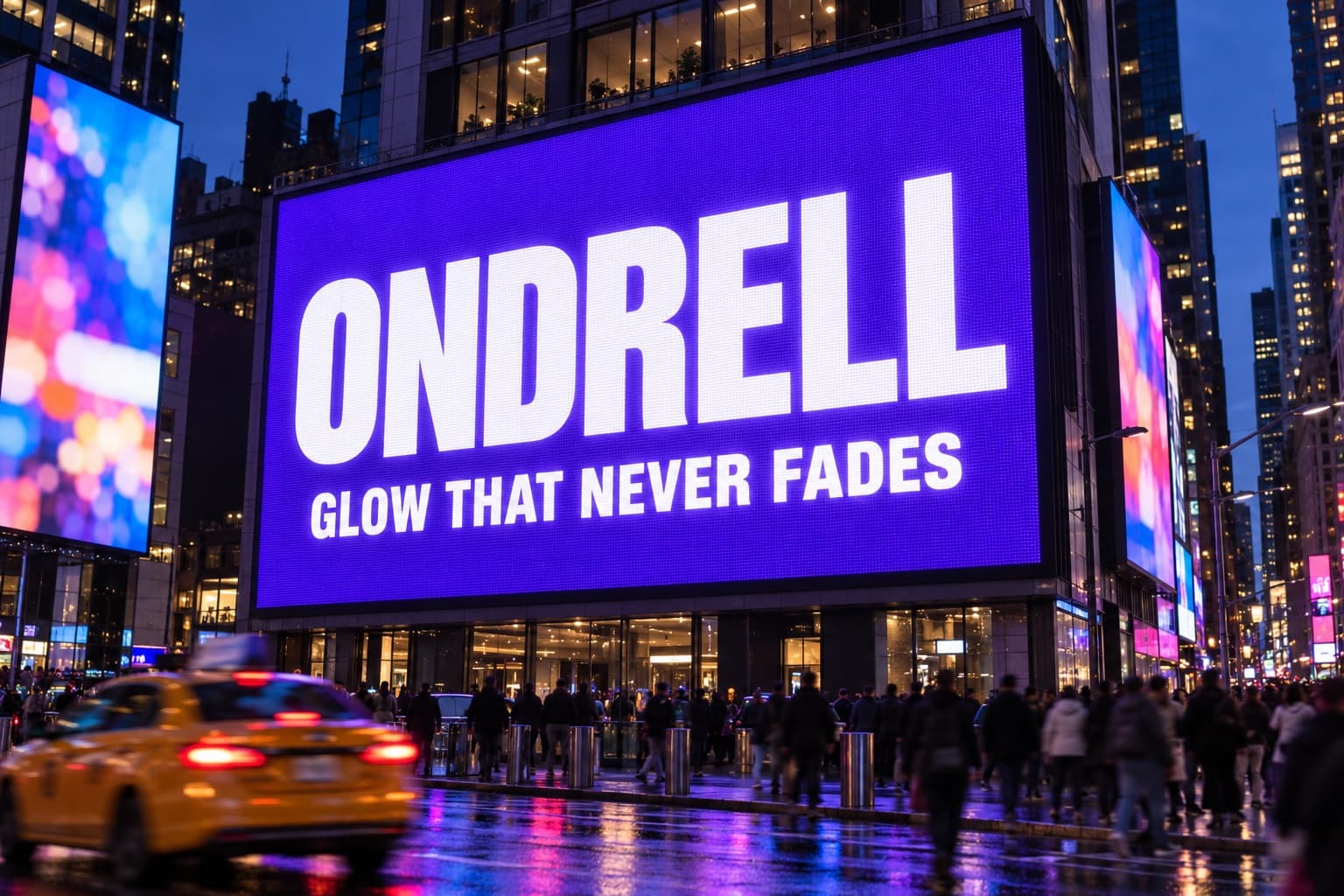
A Times Square digital billboard sells rotation, not a fixed sheet of vinyl. The screen itself is high-resolution LED, built to stay legible against daylight and to change its creative by the hour, and buying time on one has almost nothing in common with renting a static panel. What a brand actually gets depends on three mechanics that sit underneath the rate: the screen type, the dayparting, and how the loop itself is sold.
This piece stays with the inventory, not the invoice. For what a placement actually costs, see the cost guide to Times Square — this one is about what gets bought before a rate ever comes up.
What Makes a Times Square Digital Billboard "Digital"
Walk the square and almost nothing is a static poster. The screens are emissive LED panels, not backlit prints, built at a pixel density meant to read clearly from across a wide avenue and bright enough to hold up against daylight rather than only looking good at night. That changes what the hardware can do: a static board carries one printed face until the flight ends, while a digital face can carry a different advertiser every few seconds, swap creative by time of day, and run motion rather than a fixed image.
It also changes what "the screen" means as a unit of sale. A single digital face in the square is rarely sold as one exclusive placement the way a static bulletin is. It is sold as access to a loop — the same mechanic that governs how a digital billboard's rotation and share of voice work on any digital face, just pushed to the far end of demand because of where it sits.
Dayparting: Why the Same Screen Sells Differently by Hour
A Times Square screen does not see the same audience at 8 a.m. that it sees at 8 p.m. The morning carries a commuter crowd moving with purpose; midday and early evening bring the tourist density the square is known for; late night thins the foot traffic but keeps vehicle visibility. Because the audience composition shifts that much across a single day, inventory is frequently planned and sold in day-part blocks rather than as one flat 24-hour buy.
This is the same logic behind how DOOH targeting and measurement works on any digital out-of-home face — audience data tied to time of day, not just location, is what lets a planner choose a morning block over an evening one instead of buying the whole day by default. In the square, that choice matters more than almost anywhere else, because the swing in foot traffic between day parts is so large.
Loop Share and Spot Buys: How the Rotation Works
Most Times Square digital inventory sells as a loop share — a slice of a repeating cycle, split with several other advertisers rather than one brand holding the screen outright. A shorter loop, fewer advertisers sharing it, or an exclusive spot inside a longer loop all change how much of the audience's attention a single advertiser's creative actually captures, independent of the screen's size or position.
A spot buy or exclusive slot works differently: one advertiser controls the screen, or a defined portion of the loop, for a set stretch of time. That is a different commitment than a shared rotation, and it is the version of the buy most associated with a full building takeover or a launch moment timed to the square.
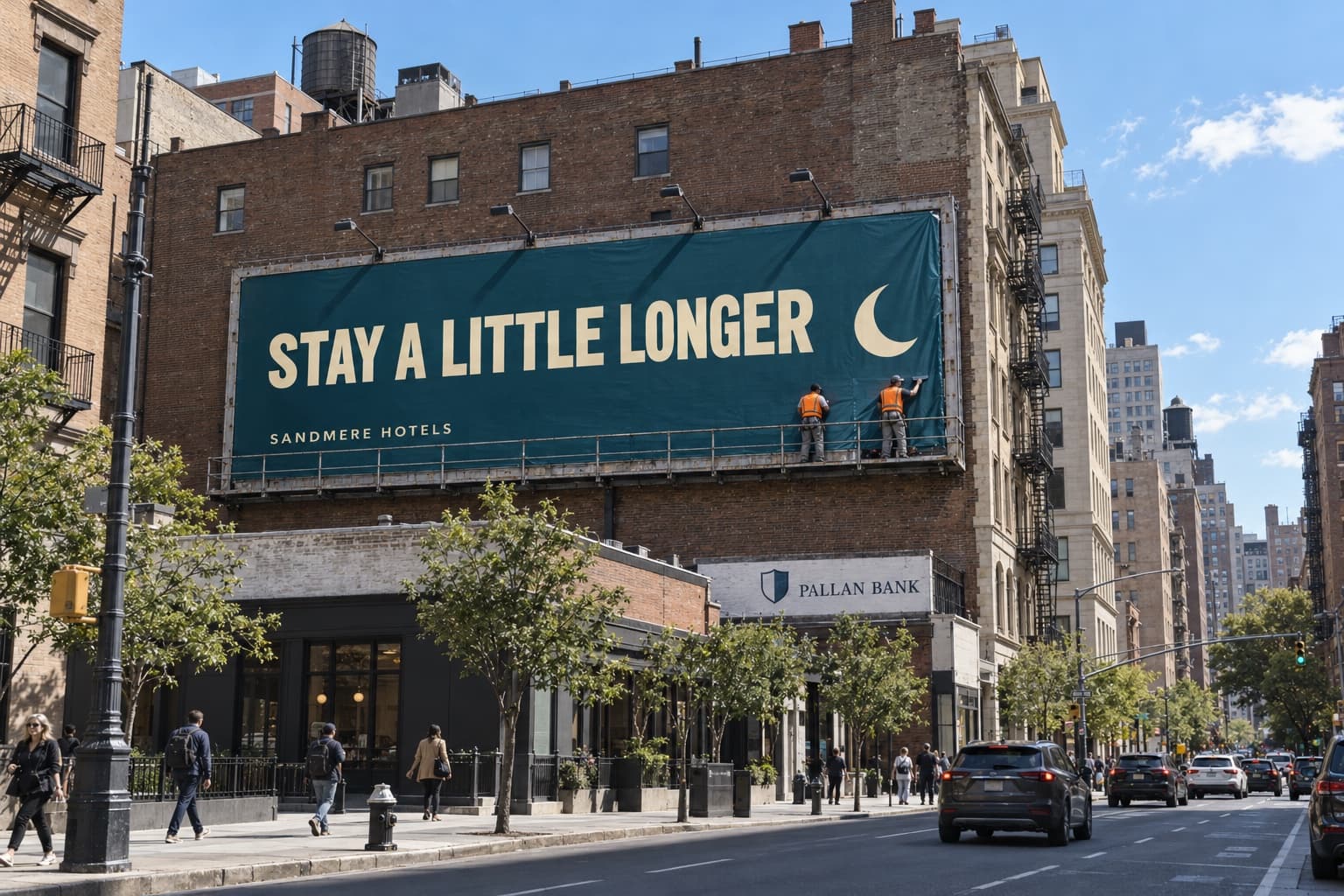
Either way, the rotation model is the opposite of how a static board sells. A static face is one advertiser, one exclusive message, for the length of the flight. A digital face almost always means sharing the glass with other advertisers unless the buy specifically pays to avoid that.
Creative Specs: What a Brand Has to Deliver
Digital inventory trades a print cost for a production cost, and the specs are stricter than most first-time buyers expect:
- Resolution and aspect ratio matched to the specific screen. Times Square has no single standard panel — each screen has its own exact pixel dimensions and proportions, so creative built for one face is not automatically correct for another.
- Motion, not just a static frame. Most digital inventory in the square accepts, and often expects, moving creative rather than a single still image.
- File format and loop-length rules set by the operator. Each screen has its own accepted file types and a maximum creative duration tied to how long its loop runs.
- Lead time for encoding and approval. Digital creative still has to be built to spec, encoded, and cleared before it goes live — there's no printing step, but there is a production and review step in its place.
A brand that treats digital creative as "the same ad, just on a screen" usually finds out at the worst possible moment that the file doesn't fit the face it was bought for.
Buying Digital vs. Buying Static in the Square
The two inventory types are sold on different logic, and that difference is what actually drives the buying decision:
- Static is one exclusive face for the length of a flight. The cost is weighted toward printing, mounting, and holding the position; there's no sharing and no loop to think about.
- Digital is access to a rotation — a loop share or a spot buy — with the cost weighted toward production and the value of the time slice itself, not toward the physical sign.
Which model applies is what a buyer needs to settle before asking for a number, because loop mechanics rather than printing are what decide what a digital placement delivers. See the full range of formats a planner works with beyond Times Square, including the markets where the same digital-vs-static logic applies at a smaller scale.
Frequently Asked Questions
Is every screen in Times Square sold the same way? No. Position, screen size, and operator all set different rules for loop length, exclusivity, and minimum spend, which is why two screens a block apart can be bought on very different terms.
Can a brand buy only part of the loop? Yes — a loop share is the more common, more accessible way into the square than an exclusive slot, since it splits the screen's time across several advertisers' rotations instead of one.
Does digital creative need to be a video? Not necessarily, but most Times Square digital inventory is built to carry motion, and a static frame on a motion-capable screen reads as unfinished next to the creative around it.
Why does dayparting matter more here than in most markets? Because the swing in foot traffic between a weekday morning and a Saturday evening in the square is larger than almost anywhere else, so the audience a day-part block reaches can differ enormously even on the same screen.
Plan a Times Square Placement
Screen type, dayparting, and loop mechanics are what actually decide what a brand gets out of a Times Square digital placement — the rate follows from those, not the other way around. Plan A Campaign to talk through a specific screen and dates, or talk to Swing Media about where digital inventory fits a wider media plan.